Most agents say they want more listings, but very few build a real what’s my home worth lead generation system that works while they’re out showing property, hosting open houses, or chasing paperwork. That’s a mistake, because homeowners are already searching for their value, and if your page captures that curiosity the right way, it can turn casual traffic into seller leads, listing consultations, and signed agreements.
Want seller leads on autopilot? ListingLeads.io combines Google Ads, home value tools, and AI follow-up to book listing appointments while you sleep. Book your free strategy call now →
Why what’s my home worth lead generation works so well for real estate agents
Seller leads are different from buyer leads. They usually have equity, urgency, and a bigger financial decision ahead. If you get in front of them early, before they call three agents and ask all of you to “tell me your marketing plan,” you have a real shot at winning the listing.
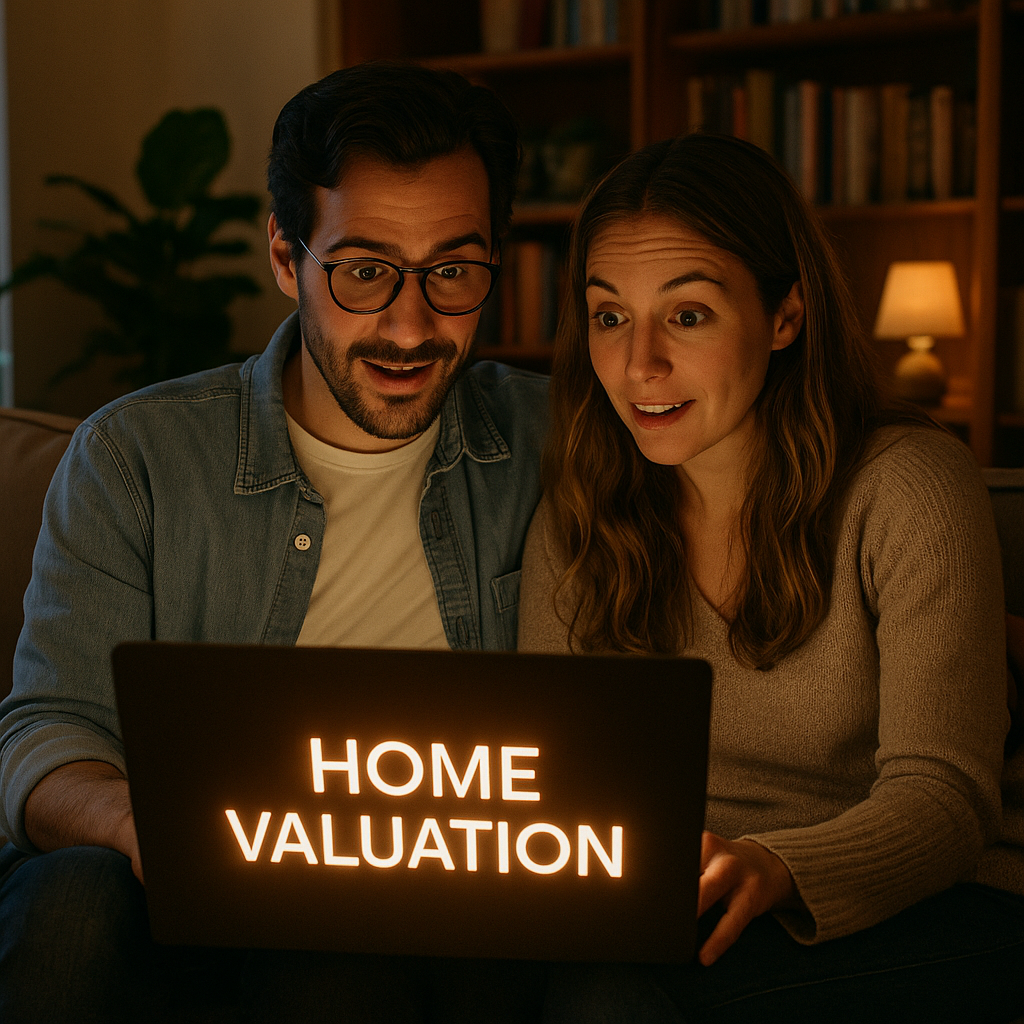
A what’s my home worth page works because it matches intent. The homeowner is already thinking about value. That usually means they’re wondering about selling, refinancing, moving up, downsizing, handling an inherited property, or testing the waters before making a move.
Google loves intent-driven searches, too. Terms related to home value often signal much stronger seller motivation than broad branding ads ever will. That’s one reason many agents shift budget toward seller funnels after reading guides like these real estate lead generation ideas that win listings.
1. It captures homeowners at the exact moment curiosity turns into action
A seller rarely wakes up and says, “Today I’m interviewing Realtors.” It starts smaller. They wonder what the neighbor’s sale did to their value. They see mortgage rates in the news. They get transferred for work. Their kids leave for college. Curiosity kicks in first.
That moment matters. If your home valuation page shows up right then, you become the first agent attached to their selling thoughts. First impressions still count. A lot.
Why timing beats generic branding
Billboards, postcards, and bus bench ads can help with awareness. But a homeowner searching for value is raising their hand right now. That’s why intent-based traffic from Google often produces stronger lead quality than interruption-based channels. If you want examples, check out how Google Ads generate seller leads in real estate.
2. It gives you a reason to start a conversation without sounding salesy
Nobody likes the follow-up call that feels like a cold ambush. “Hi, just checking if you want to sell your home in the next 30 minutes?” Hard pass.
A home value inquiry gives you a natural opener. You’re not calling out of nowhere. You’re following up on a request. That changes the entire tone of the conversation.
- ▸ “I saw you requested your home value. Want me to give you a more accurate number based on recent sales nearby?”
- ▸ “There are two ways to price this. Online estimate, or true market value based on condition and buyer demand.”
- ▸ “Are you just curious, or thinking about a move in the next 6 to 12 months?”
That’s a real conversation. Not a pitch. Not a script that sounds like it was written in a basement by somebody who has never been to a listing appointment.
3. It helps you build a listing pipeline instead of living deal to deal
Too many agents run their business like a smoke detector. Nothing happens, then suddenly everything is on fire. They close a deal, panic, prospect hard for two weeks, get busy again, then disappear from lead generation.
A good seller funnel fixes that. A consistent home value page can collect leads from your farming area, sphere, Google Ads traffic, open house follow-up, and social content. Over time, that creates future listings sitting in your database instead of wishful thinking sitting in your head.
If you’re building that bigger machine, this article on the parts of a seller lead generation system that works pairs perfectly with this one.
4. It works across multiple lead sources, not just Google Ads
A lot of agents think a home value page is only useful if they run paid traffic. Not true. It can support almost every seller prospecting activity you already do.
Places to use your home value page
- ▸ QR codes on open house signs and brochures
- ▸ Follow-up texts to your sphere of influence
- ▸ Farming postcards with a simple call to action
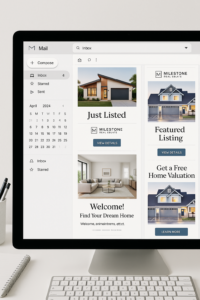
- ▸ Email newsletters to past clients
- ▸ Expired listing outreach
- ▸ FSBO conversations
- ▸ Local Facebook community posts and Instagram bio links
That’s why agents who are serious about digital farming often connect neighborhood campaigns to valuation pages. If that’s your lane, take a look at digital real estate farming lead strategies that work.
5. It gives you better seller data than most lead forms
A plain “Contact Me” page doesn’t tell you much. A home value lead form can. Depending on the setup, you may collect the property address, estimated value range, ownership details, timeline clues, and engagement history.
That context helps you prioritize leads better. A homeowner with a $650,000 property in your farm who checks their value twice in 10 days is not the same as somebody who clicked one random ad at midnight because they couldn’t sleep and Zillow was boring.
The best seller lead is not always the hottest one. It’s the one you understand well enough to follow up with the right message at the right time.
Choosing the right tech matters here. If your current tool is clunky, inaccurate, or ugly, homeowners will bounce. This is why many agents compare options before launching. A smart place to start is these home valuation lead capture tools compared.
6. It creates repeat touchpoints that warm up future listings
Most homeowners are not ready to list the same day they check value. That’s normal. Nurture is where the money is.
Once someone enters your funnel, you can follow up with monthly value updates, local market shifts, recent comparable sales, home prep tips, and “what your neighbor’s home sold for” style emails. These touchpoints keep you visible without sounding pushy.
Pattern interrupt. Here’s the part most agents miss.
The lead form is not the strategy. The follow-up is the strategy. A weak page with excellent follow-up can still produce appointments. A perfect page with no follow-up becomes an expensive digital paperweight.
That’s one reason ListingLeads.io focuses on the full chain. Ads. Capture. AI follow-up. Appointment setting. Because getting the lead is nice. Getting the appointment is better.
According to the National Association of Realtors, 81 percent of sellers contact only one agent before choosing who to work with. That means staying top of mind early is a huge advantage. Not later. Early.
7. It improves your conversion rate in listing presentations
If a seller has already interacted with your brand through a value request, email sequence, or text follow-up, the listing appointment feels warmer. You’re not some random face with a CMA and a shiny folder. You’re the agent who has been providing value for weeks or months.
That trust can raise your conversion rate in a crowded appointment. Especially if the homeowner also talked to a discount broker, their cousin’s part-time agent, and that one top producer who somehow has their face on every trash can in town.
The point is simple. Familiarity helps. A lot of listing presentations are won before you ever walk through the front door.
8. It makes your Google Ads more profitable
If you run Google Ads straight to your homepage, you’re probably wasting money. Homepages are for everybody. Seller landing pages are for people with intent. That difference matters.
A focused valuation page can improve conversion rates because the message matches the search. Someone types “what is my house worth in Dallas” and lands on a page about, well, exactly that. No confusion. No hunting around your menu. No hoping they click the right button.
This is the heart of effective what’s my home worth lead generation. Search intent in. Seller lead out.
Agents who want better paid traffic performance should study Google Ads real estate landing pages that convert and ways to boost real estate Google Ads conversion rates.
A quick example with realistic numbers
Let’s say an agent spends $1,500 per month on seller-focused Google Ads. Their valuation page converts at 8 percent. If clicks average $4.50, that’s roughly 333 clicks and about 26 leads.
Now assume solid follow-up books appointments with 15 percent of those leads. That’s around 4 listing appointments. If just one appointment turns into a listing and that listing produces a $10,000 gross commission, the math gets pretty attractive pretty fast.
Could results vary by market? Of course. But the model works in urban, suburban, and many secondary markets because homeowner curiosity exists everywhere people own homes.
9. It gives you an easier path to scale than manual prospecting alone
Circle prospecting works. Calling expireds works. Door knocking can work. But all of those depend on your time, energy, and willingness to hear “we’re all set” 47 times before lunch.
A home value page gives you a scaleable inbound channel. It keeps collecting opportunities while you’re in a listing appointment, at your kid’s soccer game, or trying to remember your DocuSign password for the fourth time that week.
That doesn’t mean outbound prospecting is dead. It means inbound makes outbound easier. A stronger database gives you more people to call, text, retarget, and convert over time.
Common objections agents have, and the honest answer
“This sounds expensive.”
Compared to what? Buying random internet leads that never answer? Sending glossy postcards forever with no tracking? One listing often covers months of seller lead generation if the system is built right.
Also, cost without context is meaningless. The number that matters is cost per appointment and cost per signed listing. That’s where smart agents focus.
“I’ve tried home value leads before, and they were junk.”
Fair. A lot of agents have. But usually one of three things happened. The traffic source was weak, the page was generic, or the follow-up was slow and inconsistent.
The issue often isn’t the concept. It’s the execution. If you want better search traffic quality, articles like Google Ads keywords that get sellers can help you see how much targeting matters.
“My market is different.”
Every agent says this, and yes, every market has its quirks. Luxury sellers think differently from first-time move-up sellers. Rural markets behave differently from dense urban zip codes. But homeowners in all of them still wonder what their property is worth.
The message and follow-up may change. The psychology doesn’t.
What a high-converting home value page should include
Not all valuation pages are equal. Some look like they were built during the dial-up era and forgotten. Others actually convert.
- ▸ A clear promise that explains what the homeowner gets
- ▸ A simple form with low friction
- ▸ Market-specific language, not canned generic copy
- ▸ Trust signals such as reviews, local stats, or sales volume
- ▸ Mobile-friendly design
- ▸ Fast load speed
- ▸ Strong follow-up automation behind the scenes
If you want examples of page structures that agents actually use, this guide on home value landing pages Realtors use to get leads is worth your time.
A brief case study scenario that shows why this works
Picture a team leader in Phoenix running a home value campaign in three target zip codes. The ads point to a seller-focused valuation page. Leads get an instant text, a follow-up email, and AI-powered replies when people engage after hours.
In 60 days, the campaign brings in 41 leads at an average cost per lead of $38. Out of those, 9 people respond to follow-up conversations, 5 book appointments, and 2 list within the next 45 days. Even if each closing produces a modest commission, the return beats a lot of traditional prospecting methods.
That’s not magic. It’s system plus consistency. The boring stuff that makes money.
How ListingLeads.io helps agents turn home value traffic into appointments
This is where most platforms stop. They hand you a lead and wish you luck. ListingLeads.io is built differently.
We combine Google Ads management, home value lead capture tools, and AI-powered follow-up automation designed specifically for real estate agents who want more seller leads. That means you’re not piecing together five tools, three vendors, and one assistant who may or may not remember to text people back.
Instead, you get a tighter system that can attract motivated homeowners, keep the conversation moving, and book listing appointments for you.
Final thoughts on using a home value page to win more listings
A great home value page is not just a website feature. It’s a seller acquisition tool. It captures curiosity, starts better conversations, supports your follow-up, improves ad performance, and helps you build a listing pipeline that does not depend on constant hustle alone.
If you want a real what’s my home worth lead generation system that brings in seller leads and turns them into booked appointments, book a free strategy call with ListingLeads.io. We’ll show you how to build the funnel, drive the traffic, and follow up like a pro without adding more chaos to your day.
Ready to Fill Your Listing Pipeline?
ListingLeads.io builds the system. Google Ads bring the sellers. AI books the appointments. You show up and win the listing.