A seller lead generation system is the difference between chasing the next listing and knowing where it will come from. Most agents do not have a lead problem. They have a system problem, which is why their pipeline feels full one month and painfully quiet the next.
Want seller leads on autopilot? ListingLeads.io combines Google Ads, home value tools, and AI follow-up to book listing appointments while you sleep. Book your free strategy call now →
If you have ever said, “I get leads, but they do not turn into appointments,” this post is for you. Great listing businesses are built on repeatable parts that work together, not random postcards, a few Facebook boosts, and hope.
Let’s break down the six parts that matter most, what each one should do, and where most agents accidentally lose sellers before the conversation even starts.
What a seller lead generation system actually needs to work
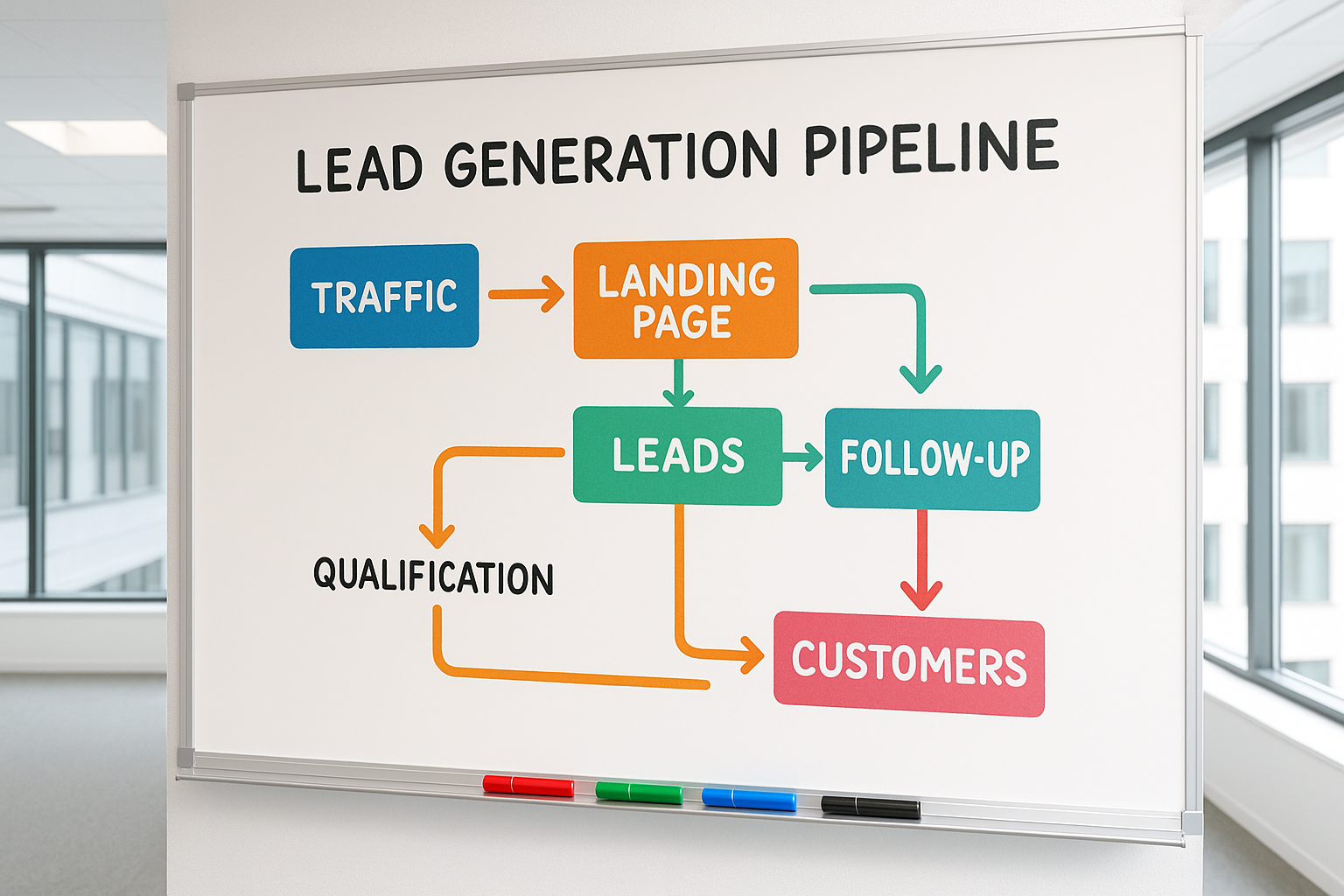
A real seller lead generation system is not one tool. It is a chain. Traffic brings in the homeowner. A lead capture offer gets the contact. Follow-up builds trust. Appointment setting moves the relationship forward. Then your listing presentation closes the deal.
Break one link and performance drops fast. That is why agents often say, “Google Ads did not work,” or “home value leads are junk,” when the real issue was poor follow-up, weak landing pages, or no speed to lead.
According to NAR and multiple inside sales benchmarks, responding to internet leads within the first few minutes can dramatically improve contact rates. Some studies have shown the odds of making contact are far higher when response time is under 5 minutes. In plain English, the first agent to show up usually has the best shot.
- ▸ Traffic source
- ▸ Lead magnet or offer
- ▸ Landing page and conversion path
- ▸ Fast follow-up
- ▸ Longer nurture sequence
- ▸ Appointment setting and handoff
Those are the six parts. Miss any one of them and your listing pipeline gets moody.
1. A traffic source that attracts motivated homeowners
The first part of the system is simple. You need people who may actually sell. Not just homeowners. Not just clicks. Potential sellers.
This is why Google Ads can be so powerful. Search traffic captures intent. If someone types “what is my home worth in Phoenix” or “sell my house fast in Tampa,” they are raising their hand. They are not scrolling past a dance video. They are looking for help.
That intent matters. A lot. For agents who want to go deeper on strategy, these hyperlocal Google Ads tactics for real estate agents are worth studying, especially if you farm specific zip codes or neighborhoods.
Why intent beats interruption
Open houses, sphere calls, farming, and expireds still work. No argument there. But they all take time, and most are effort-heavy. Paid search lets you put your message in front of a homeowner at the exact moment they are thinking about value, timing, or selling.
If your current strategy depends on “staying top of mind until someday,” that is fine. If you want appointments this month, intent-based traffic deserves a serious look.
Need help picking terms that actually pull in sellers? This guide to 127 real estate Google Ads keywords that get sellers can save you from paying for the wrong clicks.
2. A lead offer sellers actually want
Most homeowners will not fill out a form because an agent says, “Contact me for more info.” That is weak. They will act when the offer is immediate, useful, and relevant to where they are mentally.
The classic winner is a home value lead capture tool. Why? Because curiosity is undefeated. Homeowners want to know what their home could sell for, what changed in the neighborhood, and whether now is the right time to move.
What makes the offer convert
- ▸ It speaks to a real seller question
- ▸ It promises a specific benefit
- ▸ It feels easy to claim
- ▸ It does not ask for too much upfront
Examples include instant home value reports, neighborhood market updates, net sheet estimates, or a “what could your home sell for in the next 30 days” calculator. If you want a broader mix of ideas, check out these predictive seller lead tools for real estate agents and these best seller lead generation tools for Realtors.
Sellers do not wake up hoping to “become a lead.” They want an answer first. Your offer is the bridge.
3. A landing page built to convert, not just exist
Here is where many campaigns quietly fail. The ad gets the click. The homeowner is interested. Then they land on a page that looks like it was built during the flip phone era. Goodbye.
A good seller landing page should be focused, fast, mobile-friendly, and specific to the market. No clutter. No ten menu options. No generic “we are your trusted local experts” headline that every other site uses too.
Your page should answer three questions fast
- What am I getting?
- Why should I trust you?
- What should I do next?
That means clear copy, proof points, maybe a testimonial or two, and a simple form. If your form asks for first name, last name, phone, email, address, timeline, reason for selling, favorite pizza topping, and blood type, expect drop-off.
Pattern interrupt. More traffic will not fix a weak conversion path. If your page converts at 4 percent and you improve it to 10 percent, you did not need more clicks. You needed fewer leaks.
4. Speed to lead and follow-up that starts immediately
A lead is hottest right after they convert. Not tomorrow morning. Not after your showing. Not when you finally finish updating the MLS remarks.
This is where a lot of listing opportunities die. The homeowner submits a value request. They get no response for hours. Then another agent calls, texts, and follows up with useful info. Guess who gets the meeting.
What immediate follow-up should include
- ▸ Instant text confirmation
- ▸ Fast email with value context or next step
- ▸ A prompt call attempt
- ▸ Ongoing text and email nurture if they do not answer
This is exactly why AI-powered follow-up automation matters. Not because it sounds fancy, but because humans get busy. You are in listing presentations, inspections, open houses, school pickup, or trying to return six calls at once. Automation fills the gap before interest cools off.
If you want to see the full flow, take a look at how ListingLeads.io works. It is built specifically to help agents capture, contact, and convert seller leads without babysitting every step.
5. Nurture that builds trust until the timing is right
Not every seller lead is ready now. Some are six months out. Some are “we might move if rates settle.” Some are curious because the neighbor sold for a number that made everyone on the street suddenly very attentive.
This is where nurture separates pros from dabblers. Your system needs to stay in touch in a way that feels helpful, not needy. Think local market updates, seller tips, pre-listing prep advice, and occasional check-ins that sound human.
Good nurture sounds like this
“Hey Sarah, a home down the street just sold in 9 days. If you want, I can show you what that may mean for your price range.”
Not like this.
“Just checking in again to see if you are ready to list your home this week.”
One feels useful. The other feels like hiding behind the couch when your phone lights up.
For agents who want more seller lead ideas beyond one channel, this post on ways to get seller leads in real estate right now is a smart companion read.
6. Appointment setting that turns interest into listing conversations
This is the goal. Not leads for the sake of leads. Not dashboards. Not vanity metrics. Appointments.
A strong seller lead generation system should help move homeowners toward a call, a pricing review, or an in-person consultation. That transition needs to feel natural. If they requested their home value, the next step might be reviewing pricing accuracy, discussing updates that affect value, or planning a timeline based on local inventory.
The handoff matters
This is where many agents need support. They can talk to people. They are great in the living room. But they are inconsistent at getting the appointment booked in the first place. Good automation should not replace the agent. It should tee up the conversation and get the calendar filled.
If you are comparing providers, this roundup of real estate seller lead companies ranked for 2026 can help you sort out what is actually built for listings versus what is just repackaged buyer lead tech.
A quick example of how the system plays out
Imagine a team leader in Charlotte puts budget into Google Ads focused on “home value” and “sell my house” terms. The ad sends traffic to a market-specific valuation page with a simple form and clear promise.
Over 30 days, the campaign generates 52 seller leads at an average cost per lead of $38. About 60 percent engage with text or email. Eleven book valuation calls or listing consultations. Three listings are signed.
Could every market hit those numbers? Of course not. But that type of math is very realistic when the system is built correctly. One listing often pays for the entire marketing effort. The rest becomes margin.
Common objections agents have, and the honest answer
“This sounds expensive”
Fair. But the better question is what it costs to stay inconsistent. If your business depends on referrals alone, one slow season can hurt badly. A working seller lead generation system gives you control, predictability, and fewer months where you stare at your pipeline like it personally offended you.
“I have tried online leads before”
A lot of agents have. Usually with weak targeting, poor follow-up, or generic portals that mix buyer noise with seller intent. That does not mean the channel failed. It usually means the system was incomplete.
“My market is different”
Every market has its quirks. Luxury, rural, military, snowbird, relocation-heavy. Sure. But homeowners everywhere still ask the same core questions. What is my home worth? Is now a good time to sell? Who can guide me through it? The system adjusts to the market. The buyer psychology, or in this case seller psychology, is more consistent than most agents think.
What to focus on first if your listing pipeline is thin
Do not try to build all six parts manually from scratch while also running your business. That is how good intentions turn into twelve open tabs and zero appointments.
Start with these priorities:
- Choose one strong traffic channel
- Use one clear seller offer
- Make sure your landing page converts
- Automate immediate follow-up
- Nurture consistently until they are ready
- Track appointments, not just leads
If you want the simplest version of that plan, see how the ListingLeads.io system works. It is designed for agents who want listings without building a mini marketing agency inside their office.
The bottom line
A real seller lead generation system is not magic. It is structure. You need the right traffic, a strong seller offer, a page that converts, fast follow-up, thoughtful nurture, and a process that books appointments consistently.
Agents who build those six parts win more listings with less guesswork. If you want help putting a seller lead generation system in place that brings in homeowners, follows up automatically, and helps turn clicks into conversations, book a free strategy call with ListingLeads.io. We will show you what is working, what to fix, and how to fill your listing pipeline without adding more chaos to your week.
Ready to Fill Your Listing Pipeline?
ListingLeads.io builds the system. Google Ads bring the sellers. AI books the appointments. You show up and win the listing.