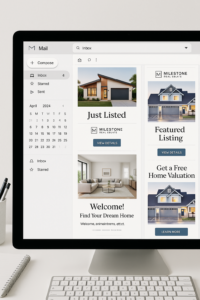
Most agents do not have a lead problem. They have a timing problem. Predictive seller leads real estate tools are built to solve that by helping you identify homeowners who are more likely to list before they raise their hand publicly. If you are tired of chasing cold lists, buying random internet leads, or begging your sphere for referrals between open houses, this is where things start to get interesting.
Want seller leads on autopilot? ListingLeads.io combines Google Ads, home value tools, and AI follow-up to book listing appointments while you sleep. Book your free strategy call now →
How predictive seller leads real estate tools actually help agents win listings
A predictive seller tool uses data points to estimate which homeowners may sell in the near future. That can include equity position, length of ownership, life events, property characteristics, online behavior, and dozens of other signals.
The goal is simple. Talk to more likely sellers earlier than your competitors do.
That matters because timing is everything in listings. According to NAR, many sellers contact only one agent before signing. If another agent reaches them first with the right message, your postcard, follow-up text, and charming smile at the community event may never get a chance.
But here is the catch. A predictive list by itself is not a listing pipeline. You still need traffic, lead capture, follow-up, and appointment setting. That is exactly why systems matter more than software.
If you want the full picture of what that system can look like, check out how ListingLeads.io works. It ties the pieces together instead of handing you another login and wishing you luck.
What to look for in a predictive seller lead tool
Before we get into the five tools, let’s talk about what separates a useful platform from a very expensive distraction.
- ▸ Data quality. Bad data creates fake opportunity and real frustration.
- ▸ Freshness. A homeowner who looked ready to sell nine months ago may already be gone.
- ▸ Contact coverage. If the records do not include reachable phone numbers, emails, or mailing addresses, your team is guessing.
- ▸ Workflow fit. Can you use it with your CRM, call sessions, direct mail, and ISA process?
- ▸ Intent capture. Does it identify likely sellers, or does it also help convert active ones who are searching right now?
That last point is where many agents get tripped up. Predictive data is useful. But seller intent is even better. A homeowner quietly fitting a model score is nice. A homeowner actively searching “what’s my home worth” is gold.
5 predictive seller lead tools for real estate agents
1. SmartZip
SmartZip is one of the better known names in predictive marketing for real estate. Its value comes from ranking homeowners by likelihood to sell, then helping agents market to those households through mail and digital ads.
This can work well for agents who already have a consistent farming strategy and want more precision. Instead of blanketing 5,000 homes and praying for one listing appointment, you can focus budget on a narrower group.
The downside. It can be expensive, and agents often underestimate how much follow-up is still required. Buying a score is not the same as booking a meeting.
2. Likely.AI
Likely.AI focuses on AI modeling to identify homeowners who may be ready to sell. It is often used by teams and brokerages that want to build outbound lists for calling, texting, and mailing.
If your team has an ISA, a dialer, and a real follow-up process, this can be powerful. If your current process is “I’ll call them after my 3 p.m. showing if I remember,” maybe not.
That is not a joke, by the way. That is how a lot of lead spend dies.
3. Revaluate
Revaluate is known for using consumer and behavioral data to estimate likely movers. It is often discussed beyond residential resale, but real estate agents use it to identify homeowners who may be entering a move window.
This can be useful for sphere mining, past client reactivation, and database segmentation. Say you have 2,500 old contacts in your CRM. Instead of blasting the same generic newsletter to everyone, you can prioritize likely movers with more direct outreach.
Used well, it helps answer a question every agent asks. “Who should I call first?”
4. Offrs
Offrs is another familiar player in predictive seller marketing. It gives agents seller predictions and often pairs them with marketing tools like postcards and automated outreach campaigns.
For solo agents, that all-in-one appeal can be attractive. The challenge is that “all-in-one” sometimes means “good enough at many things, great at none.” You still need to ask whether the contact data is accurate, whether the outreach gets responses, and whether the leads turn into real listing conversations.
If you are comparing vendors side by side, this breakdown of real estate seller lead companies ranked for 2026 is a smart next read.
5. ListingLeads.io
This is where I am going to give you a strong opinion. ListingLeads.io is the smarter move for most agents because it focuses on active seller intent, not just predicted behavior.
Instead of merely saying, “This owner might sell soon,” ListingLeads.io helps you capture homeowners who are actively searching for home values and seller-related information through Google Ads. Then it layers in home value lead capture and AI follow-up that books appointments for you.
That means you are not just working a maybe. You are meeting sellers at the exact moment curiosity turns into action.
Here is the pattern interrupt. The best seller lead is not always the homeowner with the highest predictive score. It is often the one who searched Google at 10:14 p.m. to find out what their home might sell for before talking to an agent.
That is why ListingLeads.io deserves a spot in any serious conversation about predictive seller leads real estate strategies. It turns intent into appointments, which is the part that actually pays your bills.
Why intent beats prediction for most agents
Let’s make this practical. Imagine two homeowners in your farm.
Homeowner A has a strong predictive score because they have owned the home for 14 years, have solid equity, and fit several common move patterns. Homeowner B just typed “how much is my house worth in Phoenix” into Google and submitted a home value form.
Which one would you rather talk to first?
Exactly.
Google processes billions of searches per day, and search intent remains one of the strongest buying signals in digital marketing. For seller leads, that means someone actively searching valuation terms is often closer to a listing conversation than someone sitting quietly in a predictive audience.
If you want to see why search-based lead generation is such a strong fit for agents, read why Google Ads beat Facebook Ads in real estate. It explains the intent difference really well.
A simple case study scenario most agents can relate to
Let’s say an agent in Tampa spends $1,500 per month on broad online leads and another $800 on farming mailers. The results are messy. Lots of names. Few actual listing appointments.
Now compare that to a seller-focused system using Google Ads, home value capture, and automated follow-up. Over 60 days, the campaign generates 38 seller leads at an average cost per lead of $42. Of those, 11 book conversations, 5 become listing appointments, and 2 sign.
Even with conservative commission assumptions, that math gets attractive very quickly.
No, every market will not produce those exact numbers. But the structure is what matters. Better intent. Faster follow-up. More conversations. More appointments.
Common objections agents have, and the honest answers
“These tools cost too much.”
Some do. No question.
But the better question is whether the spend creates appointments. Agents often tolerate hidden waste because it feels familiar. They spend thousands on postcards no one tracks, Facebook boosts that mostly entertain past clients, or old online leads that never answer after month one.
A system that produces listing appointments is not “expensive” in the same way random marketing is expensive. One has a path to ROI. The other has vibes.
“I’ve tried seller leads before and they were junk.”
Fair. A lot of agents have.
Usually the problem is one of three things. Wrong traffic source. Weak lead capture. Slow follow-up. Most lead programs fail in the gap between inquiry and conversation.
That is where AI follow-up changes the equation. Not because robots are taking over real estate. Relax. But because consistent speed matters. Harvard Business Review famously found that companies that respond within an hour are dramatically more likely to qualify leads than those that wait longer. Real estate is no different.
“My market is different.”
Every agent says this. And yes, your market has local quirks.
But homeowners in Dallas, Denver, Charlotte, and Sacramento still search for home values. They still hesitate before reaching out. They still compare agents. Human behavior travels pretty well.
If you want ideas for adapting campaigns locally, these hyperlocal Google Ads tactics for real estate agents are worth stealing.
How to use predictive seller tools with the rest of your listing strategy
The strongest agents do not rely on one channel. They build a system where each piece supports the others.
- Use predictive data to prioritize outreach in your farm, your database, and your sphere.
- Run Google Ads to capture active sellers searching right now.
- Offer a home value tool that gives homeowners a reason to raise their hand.
- Automate follow-up so leads do not go cold while you are in a listing presentation, showing homes, or trying to inhale a protein bar in your car.
- Track appointments and signed listings, not vanity metrics.
That balanced approach beats the old “one weird trick” model every time.
If you are still building your seller lead plan, these guides on ways to get seller leads in real estate right now and the best seller lead generation tools for Realtors will help you map it out.
The Google Ads piece most agents miss
Not all seller search traffic is equal. Some keywords attract tire-kickers. Others attract people who are halfway to a listing appointment.
For example, someone searching “Zillow estimate” may just be curious. Someone searching “sell my house fast in Nashville” or “what is my home worth in Scottsdale” is usually closer to action. Keyword strategy matters more than most agents realize.
That is why a seller lead system should not just generate clicks. It should attract the right searches. This list of Google Ads keywords that get sellers gives you a sense of how specific that can get.
Who should use predictive seller lead tools, and who should skip them
These tools are a great fit if you:
- ▸ Work a geographic farm and want smarter targeting
- ▸ Have a team or ISA that can follow up consistently
- ▸ Want to reactivate old leads and past clients
- ▸ Care about building a repeatable listing pipeline instead of living deal to deal
You may want to skip standalone predictive tools if you:
- ▸ Do not have time to prospect manually
- ▸ Need appointments faster, not just names faster
- ▸ Have been burned by raw lead lists before
In that case, a done-for-you system like ListingLeads.io is usually the better fit because it solves for intent, capture, and follow-up in one place.
Final verdict
The best predictive seller leads real estate strategy is not about finding more homeowners who might sell someday. It is about building a reliable path from seller intent to signed listing. Predictive tools like SmartZip, Likely.AI, Revaluate, and Offrs can all play a role, especially if your team has solid outbound systems. But if you want the shortest route to actual listing appointments, ListingLeads.io gives you the part most agents are really missing. High-intent Google traffic, home value lead capture, and AI follow-up that keeps working when you cannot. If you are serious about growing your listing pipeline, book a free strategy call with ListingLeads.io and see what this could look like in your market.
Ready to Fill Your Listing Pipeline?
ListingLeads.io builds the system. Google Ads bring the sellers. AI books the appointments. You show up and win the listing.