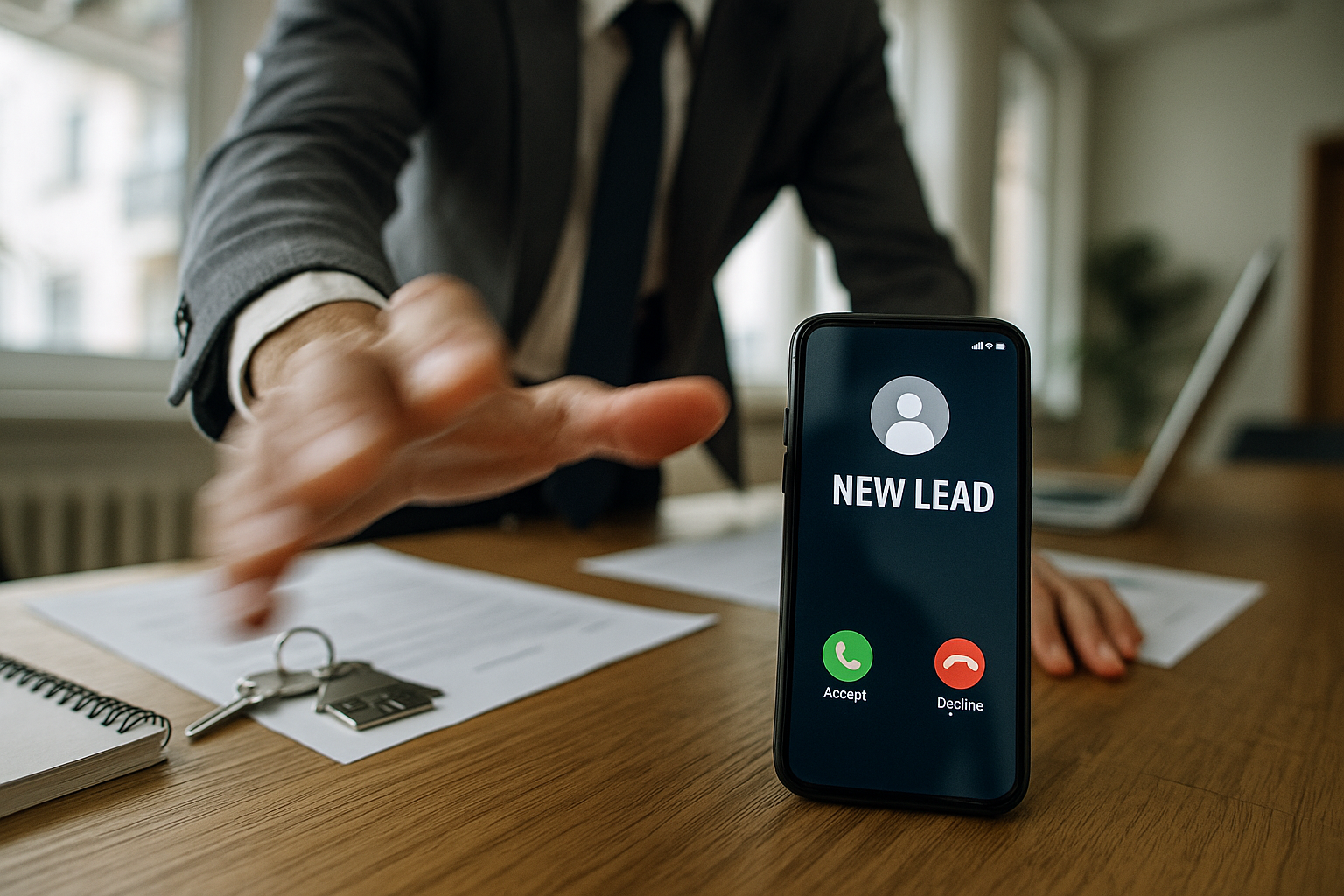
If you care about speed to lead real estate, here’s the uncomfortable truth. Most agents are not losing listing appointments because of bad scripts, weak branding, or a lack of hustle. They’re losing because they wait too long to respond, and by the time they call, the seller has already talked to someone else.
Want seller leads on autopilot? ListingLeads.io combines Google Ads, home value tools, and AI follow-up to book listing appointments while you sleep. Book your free strategy call now →
And no, this is not just a buyer lead problem. Seller leads are often even more time-sensitive. A homeowner checking their value at 9:12 p.m. after a stressful dinner conversation about moving is not filling out your form for fun. They want answers, reassurance, and a next step. Fast.
So let’s get into the three stats every agent, team leader, and broker should know, what they mean in real life, and how to fix the gaps before more listing opportunities slip through your fingers.
Why speed to lead real estate numbers matter more than most agents realize
A lot of agents think lead generation is the hard part. Sometimes it is. But once a lead comes in, the real race starts.
The seller does not care how much you spent on ads. They do not care how pretty your landing page looked. They care that someone responded quickly and sounded helpful.
This is especially true if you’re running Google Ads, using a home value estimator, targeting expireds, or farming a neighborhood online. Those leads are often high intent, but they are not patient. If you need help attracting the right kind of traffic in the first place, take a look at how Google Ads generate seller leads in real estate and why those leads tend to convert well when follow-up is tight.
Think about a few familiar scenarios:
- ▸ A homeowner visits your “What’s My Home Worth” page after seeing your postcard.
- ▸ An expired listing lead clicks your ad and requests more info.
- ▸ A past client’s cousin fills out your valuation form at 10:30 p.m.
- ▸ A farm area homeowner sees your Google ad, then submits a lead while comparing three agents.
In all four cases, speed matters. A lot.
Stat #1. Contacting a lead within 5 minutes can make you 100 times more likely to connect
This is the stat that should wake up every team owner in America.
Research from Lead Connect found that calling a lead within 5 minutes makes you 100 times more likely to connect compared with waiting 30 minutes. It also found you are 21 times more likely to qualify the lead if you respond within 5 minutes versus 30 minutes.
Five minutes is not a nice-to-have. In lead follow-up, five minutes is the difference between “hello” and voicemail.
That’s not a small dip in performance. That’s a cliff.
What this means for seller leads
A seller lead is usually going through a quick private decision process. They might be wondering if they should sell now, move in summer, downsize, cash out, or finally ditch that rental property that has become a second job. They are curious, but they are also emotionally warm.
If you reach out fast, you catch them while they still care. Wait 45 minutes and life gets in the way. School pickup. A showing. Work. Netflix. The dog. You know, the usual.
How agents lose here
- ▸ Lead alerts go to one busy agent who is in a listing presentation.
- ▸ The CRM sends an email, but no text and no call.
- ▸ The agent plans to “circle back later” and later never really comes.
- ▸ Nobody responds after hours or on weekends.
That’s why more teams are building automated speed layers into their follow-up. If your current system is shaky, this breakdown of automated lead nurturing systems for real estate is worth reading.
Stat #2. The odds of qualifying a lead drop fast after the first 5 minutes
A lot of agents hear the “respond fast” message and think, “Sure, but if I call back in an hour, it’s probably fine.” It usually isn’t.
Harvard Business Review research on web leads found that companies that responded within an hour were nearly 7 times more likely to have meaningful conversations with decision-makers than those that waited even longer. And while an hour sounds decent on paper, in real estate, especially with online seller leads, even that can be too slow.
The best lead doesn’t stay the best lead forever. Intent cools off. Attention shifts. Competing agents jump in.
Pattern interrupt. The problem is not usually your closing ability. It’s that you’re trying to close a lead who has already emotionally moved on.
Why this hits listing lead generation so hard
Sellers often submit leads while comparing options. They may be reviewing agents, checking estimated values, or deciding whether to request a full CMA. If your response drags, another agent gets first contact and frames the conversation first. That matters.
The first useful conversation often becomes the trusted conversation.
This is one reason home value funnels work so well when they are paired with immediate follow-up. If you want to tighten that piece, read the 5 stages of a home seller lead funnel that converts and how to add a home value estimator to your site.
A real-world example
Let’s say two agents are targeting the same ZIP code with seller ads.
Agent A gets 40 seller leads in a month and responds manually, with an average first response time of 2 hours. Agent B gets the same 40 leads but uses instant text reply, AI call handling, and task routing so the average first touch happens in under 60 seconds.
Even if Agent A is better on the phone, Agent B will usually win more conversations, more appointments, and more listings. Not because of magic. Because of math.
Stat #3. Most leads need multiple follow-ups, but most agents quit after one or two tries
Speed is step one. Persistence is step two.
Various sales studies have found that a huge percentage of conversions happen after multiple contact attempts, yet many salespeople give up after just one or two. Real estate agents are not immune to this. In fact, many are worse because their day gets hijacked by contracts, showings, inspections, and, occasionally, fires they did not start but still have to put out.
A seller lead who doesn’t answer the first call is not dead. They might be working. They might be skeptical. They might just hate unknown numbers, which, honestly, fair.
What consistent follow-up looks like
- ▸ Immediate text acknowledging the request
- ▸ Fast call attempt within minutes
- ▸ Email with value, not fluff
- ▸ Multiple touchpoints across the next 7 to 14 days
- ▸ Long-term nurture if they are not ready yet
This is where tech helps the most. Not to replace the agent, but to make sure no lead gets forgotten between an appraisal issue and a late-night repair addendum.
If you want ideas for the tools that handle this well, see AI lead follow-up tools for real estate agents, AI text messaging tools for real estate lead nurture, and real estate AI chatbots that qualify leads for you.
Why speed to lead breaks down for real estate agents
Most agents do not have a motivation problem. They have a systems problem.
Here are the most common reasons speed to lead real estate performance falls apart:
- ▸ Leads come in at random hours
- ▸ One person owns all follow-up
- ▸ There is no after-hours process
- ▸ New leads are mixed with old database contacts
- ▸ No one tracks response time
- ▸ The CRM is technically “set up” but practically ignored
That last one is more common than anyone likes to admit.
Objection 1. “I don’t have time to respond in 5 minutes”
Fair. If you’re in a closing, at an inspection, or knee-deep in a Saturday open house, instant manual follow-up is not always realistic.
That’s exactly why top teams use automation for first contact. An immediate text, a call connection, and a smart follow-up sequence buy you time without making the lead feel ignored. You can still step in personally once the conversation is warm.
Objection 2. “I’ve tried online leads before and they were junk”
Sometimes they were junk. Sometimes the source was weak. And sometimes the follow-up was too slow to tell.
Agents often judge lead quality after delayed follow-up, one call attempt, and zero nurture. That’s like planting seeds, forgetting to water them, then announcing gardening is a scam. A little dramatic, but you get the point.
A simple speed to lead system that actually works
You do not need a giant ISA department to improve this. You need a tight process.
- Capture high-intent leads. Focus on seller keywords, home valuation offers, and local intent. This article on Google Ads keywords that get sellers can help if your targeting needs work.
- Send instant first contact. Text and email should go out immediately.
- Attempt a call right away. The first call should happen within minutes, not “sometime this afternoon.”
- Use AI for after-hours coverage. Nights and weekends are where a lot of leads die.
- Nurture for the long sale cycle. Some sellers are 3 months out. Some are 12.
- Track response time. If you don’t measure it, you’ll guess. And your guesses will be optimistic.
Quick case study. What faster follow-up can do for listing appointments
Let’s use a realistic example based on what we commonly see with seller lead funnels.
A solo agent in a mid-size U.S. market runs home value ads and gets 55 seller leads in a month. Before improving follow-up, their average response time is about 94 minutes. They book 3 listing appointments.
Then they add instant text response, AI qualification, and a structured call-and-nurture system. Average first response time drops to under 2 minutes. Same lead source. Same market. Same agent.
The next month they still get around 55 leads, but they book 8 listing appointments. Even if only 2 or 3 turn into signed listings, the ROI changes fast.
That’s why speed to lead real estate is not just a KPI for your dashboard. It directly affects income.
What to do this week if you want more seller appointments
You do not need a six-month rebuild. Start here.
- ▸ Test your own lead form and time the response
- ▸ Check whether texts, calls, and emails fire automatically
- ▸ Review lead sources separately, especially home value and Google Ads leads
- ▸ Build a 14-day follow-up plan instead of a one-call hope strategy
- ▸ Add after-hours coverage for nights and weekends
- ▸ Make sure your seller landing pages are built to convert. If not, review these seller lead capture page templates that convert
And if your issue starts even earlier, meaning traffic quality or campaign setup, this guide on boosting real estate Google Ads conversion rates can help tighten the front end.
The big takeaway for agents, teams, and brokers
You can have a great brand, a strong sphere, polished listing presentations, and smart farming. None of that protects you if your inbound leads sit untouched.
The agents winning more listings from online leads are not always the ones spending the most. They are often the ones responding the fastest and following up the longest.
That’s the real lesson behind these numbers.
If you want better speed to lead real estate performance, you need more than lead flow. You need the full system. The ad, the capture tool, the instant response, the follow-up, and the appointment-setting layer working together. That’s exactly what ListingLeads.io helps agents build. If you want more seller leads and more listing appointments without babysitting every inquiry yourself, book a free strategy call with ListingLeads.io and let’s map out a system that actually responds while the lead still cares.
Ready to Fill Your Listing Pipeline?
ListingLeads.io builds the system. Google Ads bring the sellers. AI books the appointments. You show up and win the listing.