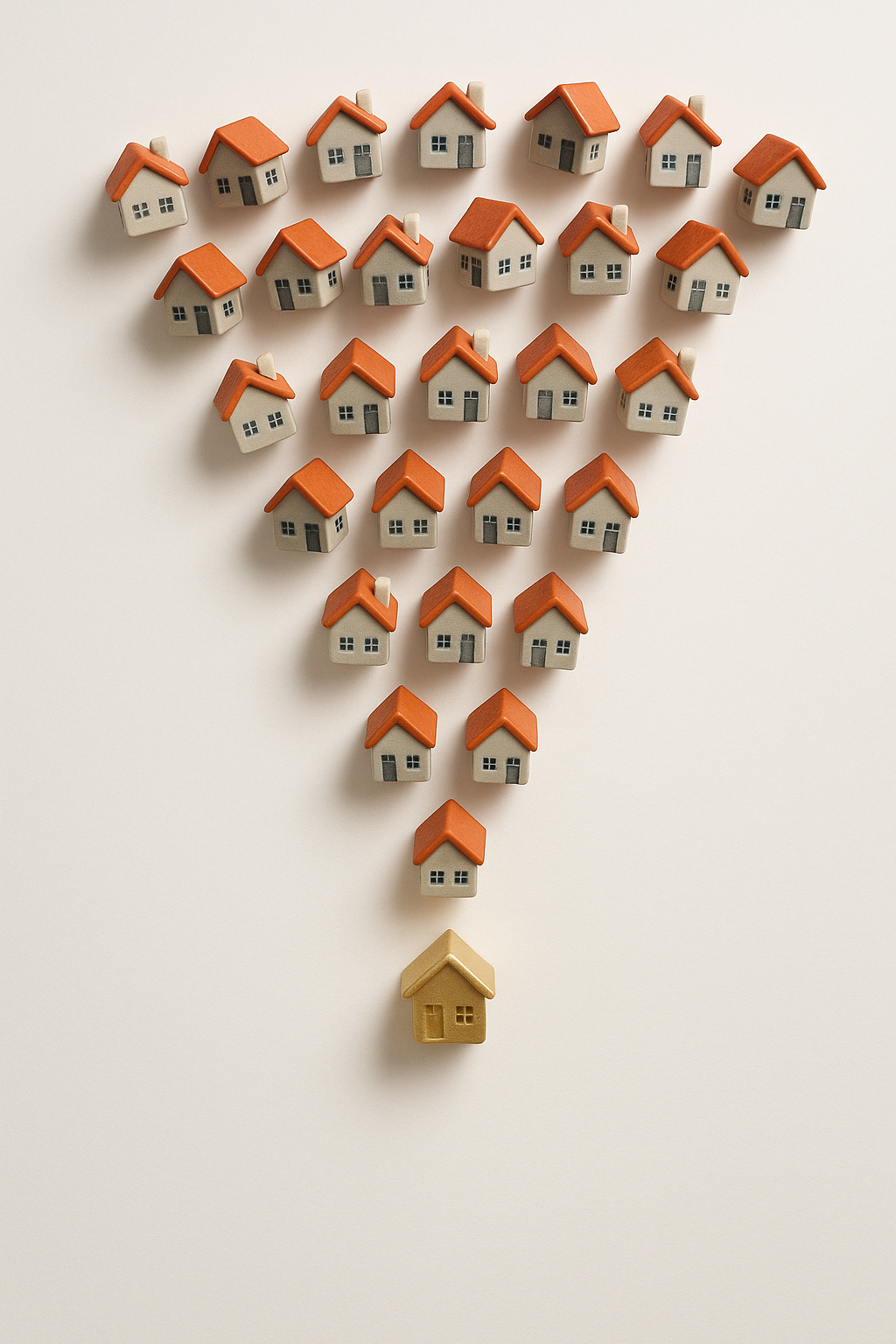
A home seller lead funnel can be the difference between random inquiries and a calendar full of listing appointments. If you are tired of chasing cold leads, paying for names that go nowhere, or praying your next open house somehow turns into a seller, this is the system you need.
Want seller leads on autopilot? ListingLeads.io combines Google Ads, home value tools, and AI follow-up to book listing appointments while you sleep. Book your free strategy call now →
Most agents do not have a lead problem. They have a funnel problem. According to NAR, the typical agent closes a relatively small number of transactions per year, and listings are still the side of the business that builds predictability, referrals, and long term income. Yet too many agents treat seller lead generation like a slot machine. Put money in, pull the handle, hope something happens.
That is not a strategy. That is stress with a login.
A great seller funnel guides homeowners from curiosity to conversation, then from conversation to consultation. In this post, I will break down the five stages that actually convert, where most agents get stuck, and how to build a system that keeps working while you are on appointments, at open houses, or trying to enjoy dinner without answering another “just browsing” text.
How a home seller lead funnel actually works
A home seller lead funnel is a step by step path that turns unknown homeowners into listing appointments. It starts with attention, captures contact information, builds trust, follows up fast, and creates a clear next step.
That sounds simple because it is simple. What makes it hard is execution.
If one stage is weak, the whole thing leaks. You can have great Google Ads, but if your landing page is clunky, people bounce. You can capture leads, but if your follow-up takes six hours, someone else gets the appointment. You can talk to the lead, but if you do not nurture properly, they disappear until they list with the agent who stayed top of mind.
Think of it like this:
- ▸ Stage 1. Get in front of homeowners with intent
- ▸ Stage 2. Offer something valuable enough to earn the lead
- ▸ Stage 3. Capture and qualify the contact
- ▸ Stage 4. Follow up quickly and consistently
- ▸ Stage 5. Convert the conversation into a listing appointment
Let’s walk through each one.
Stage 1. Attract homeowners with real selling intent
Top of funnel traffic matters more than many agents want to admit. You do not need more eyeballs. You need the right eyeballs.
This is why Google Ads work so well for seller leads. Somebody searching “what is my home worth in Plano” or “sell my house fast in Tampa” is not casually scrolling vacation photos. They are raising their hand. That intent is gold.
If you want a better starting point, these resources help: seller focused Google Ads keywords, hyperlocal Google Ads tactics, and this guide on how Google Ads generate seller leads.
Where agents usually miss the mark
A lot of agents run broad ads that target everybody. Buyers. Renters. Nosy neighbors. People looking up their Zestimate while waiting in the school pickup line.
That is how you burn budget and then say, “Google Ads do not work in my market.” Usually they do. The setup just was not seller specific.
The market is rarely the problem. The message is.
For a seller funnel, your traffic sources should focus on homeowners who are thinking about equity, timing, or moving. That includes search traffic, farming campaigns, expireds, FSBO follow-up, and sphere reactivation. If you want more ideas beyond paid traffic, check out these ways to get more listings and digital farming strategies that work.
Stage 2. Offer a lead magnet sellers actually want
Once you have attention, you need a reason for the homeowner to engage. This is where most funnels either earn the lead or lose it.
The best seller lead magnets are simple. They answer the first question nearly every homeowner asks before listing. What is my home worth?
Home valuation tools, instant estimate pages, and automated value reports work because they match existing demand. No convincing required. The seller is already curious. Your job is to make responding feel easy and useful.
What converts best
- ▸ Instant home value estimate pages
- ▸ Automated home value reports by email
- ▸ “What could I sell for in today’s market?” offers
- ▸ Move up seller reports for owners who also need to buy
If your page says “Contact me for a free CMA,” that can work, but it asks for more commitment upfront. Many homeowners are not ready for a phone call yet. They are still in research mode. A valuation lead magnet meets them where they are.
For examples, see property valuation lead magnets that attract sellers, seller lead capture page templates, and why a what’s my home worth page gets leads.
A quick opinion, because somebody has to say it
Your homepage is usually a terrible seller funnel. It has too many links, too many distractions, and not enough focus. A dedicated landing page almost always converts better.
Not glamorous. Just true.
Stage 3. Capture and qualify the seller lead without adding friction
This stage is where the home seller lead funnel starts acting like a business asset instead of a nice idea.
Capture means getting the contact information. Qualify means gathering just enough detail to know whether this is a real opportunity, a long term nurture, or a tire kicker.
The trick is balance. Ask for too little, and you get junk. Ask for too much, and conversion rates drop.
A strong seller lead form usually includes
- ▸ Property address
- ▸ Name
- ▸ Mobile number
- ▸ Timeline to sell, optional or step two
- ▸ Buying another home, optional but helpful
If you are building or improving this part of your funnel, these guides are worth your time: how to add a home value estimator to your site and features every home valuation website needs.
Industry wide, landing pages with fewer form fields often convert at a higher rate. WordStream and Unbounce data have long shown that lowering friction can improve conversions significantly, though exact lifts vary by market and offer. In real estate, I have seen seller pages convert anywhere from 8 percent to 22 percent depending on traffic quality, page design, and follow-up speed.
A practical example
Say you run ads in Phoenix targeting “home value” and “sell my house” searches. Your landing page gets 500 visitors in a month. At a 14 percent conversion rate, that is 70 leads. If half are valid contacts, you now have 35 real seller opportunities entering your pipeline.
Now imagine those 35 leads do not sit in your CRM untouched for three days. That is where the magic happens.
Stage 4. Follow up fast, then keep following up longer than everyone else
Here is the pattern interrupt.
Most seller leads do not need more persuasion. They need more speed and more consistency.
Research often cited in sales and lead response studies shows that responding within the first few minutes dramatically increases contact rates compared with waiting even 30 minutes. In plain English, the agent who follows up first usually gets the first real conversation. That matters.
But speed alone is not enough. Many homeowners are months away from listing. They request a valuation today, then go quiet. Then six weeks later they ask a friend for an agent recommendation and hire whoever stayed visible.
What great follow-up looks like
- Immediate response. Text and email go out right away.
- First call attempt. Ideally within minutes, not hours.
- Value based nurture. Market updates, pricing insights, prep tips, timing advice.
- Behavior based touchpoints. If they open, click, revisit, or reply, your follow-up adjusts.
- Appointment ask. Clear invitation to review value, timing, and net proceeds.
This is exactly where AI powered follow-up automation helps. Not because agents are lazy. Because agents are busy. You are in listing presentations, showing homes to move-up buyers, door knocking your farm, calling expireds, and trying to remember if you already texted that owner from last Sunday’s open house.
A smart system follows up instantly, keeps conversations moving, and pushes qualified leads toward an appointment while you handle the human part. Which, by the way, is still the part that wins listings.
Objection. “I’ve tried internet leads before”
Fair. A lot of agents have. And many got burned.
Usually the problem is not that online seller leads are bad. It is that the funnel was incomplete. Weak traffic. Generic landing page. Slow response. No nurture. No qualification. That is not a lead system. That is a pile of contacts.
If you buy leads and do not have a conversion system, you are basically paying for homework.
Stage 5. Turn warm leads into listing appointments
This last stage is where revenue shows up. The goal of your funnel is not clicks. It is not leads. It is not even conversations. It is listing appointments.
By the time a seller reaches this point, the ask should feel natural. They have seen your value, received useful information, and had a few touchpoints. Now you offer the next step with confidence.
Simple appointment offers that work
- ▸ “Would it be helpful to review your home’s likely price range and best timing options?”
- ▸ “I can put together a custom value review with comps and your likely net proceeds.”
- ▸ “If you are planning a move this year, I can show you what needs to happen first and what can wait.”
Notice what is missing. Pressure. Pushiness. Weird scripts that sound like they were written in a bunker in 1997.
Sellers want clarity. If you can provide clarity, you earn meetings.
Mini case study
Here is a realistic example based on the kind of funnel performance strong teams target. A mid size team spends $2,000 per month on seller focused Google Ads. The campaign drives 60 leads at roughly $33 per lead. Fast text response and AI nurture help them connect with 24. Eight agree to a deeper pricing conversation. Four book listing appointments. Two sign over the next 45 days.
If the average gross commission income per listing side is $9,000, that is $18,000 from a $2,000 ad spend, before repeat and referral business. Even with market variation, the math is hard to ignore.
That is why a home seller lead funnel is so valuable when it is built correctly. It creates predictable economics.
Common objections agents have, and the honest answer
“This sounds expensive”
Compared to what? Buying random leads forever? Losing listings because your follow-up is manual? Spending 10 hours a week on prospecting that does not scale?
A working seller funnel is an investment. But listings are the highest value side of the business for many agents. One extra listing can cover months of ad spend. Two or three can change your entire quarter.
“I do not have time to manage all this”
You should not have to. That is the point of a system.
The best funnels reduce the day to day burden on agents. Ads run continuously. Lead capture happens automatically. Follow-up starts instantly. Qualified leads get surfaced when they are ready for a conversation. You focus on appointments, presentations, negotiations, and clients.
“My market is different”
Every market has its own personality. Of course. A luxury zip code in Orange County behaves differently from a move-up suburb in Ohio.
But seller psychology is remarkably consistent. Owners want to know value, timing, and next steps. They want fast answers and a trusted guide. The funnel framework stays the same. The messaging and targeting get localized.
What the best seller funnels include behind the scenes
The five stages above are what the lead experiences. Behind the scenes, strong systems usually include a few more moving parts.
- ▸ Conversion tracking on every ad and form
- ▸ Seller specific landing pages by market or intent
- ▸ Automated valuation or report delivery
- ▸ Text, email, and call workflows
- ▸ CRM status tracking and appointment alerts
- ▸ Ongoing optimization based on cost per lead and appointment rate
If you are comparing platforms or tools, these reads can help: home valuation lead capture tools compared and seller lead generation tools for Realtors.
And if you want the big picture, this post on the parts of a seller lead generation system fills in the gaps.
Why ListingLeads.io fits this funnel so well
At ListingLeads.io, the focus is simple. Help agents get more seller leads and turn them into booked listing appointments.
That means combining three things that belong together.
- ▸ Google Ads management to attract homeowners actively searching
- ▸ Home value lead capture tools that convert traffic into seller inquiries
- ▸ AI powered follow-up automation that nurtures leads and books appointments
That combination matters because no single piece solves the whole problem. Traffic without conversion wastes budget. Conversion without follow-up wastes leads. Follow-up without intent wastes time.
Put all three together and now you have momentum.
Final thoughts on building a home seller lead funnel that converts
A strong home seller lead funnel is not magic. It is structure. First, attract seller intent. Then offer a compelling value exchange. Capture the lead without friction. Follow up quickly and consistently. Finally, guide the conversation toward an appointment.
Agents who build this well stop relying on luck, referrals alone, or whatever happened to work last spring. They create a listing pipeline they can measure, improve, and grow. If you want help putting the right home seller lead funnel in place for your market, book a free strategy call with ListingLeads.io. We will show you how to turn seller interest into real listing appointments.
Ready to Fill Your Listing Pipeline?
ListingLeads.io builds the system. Google Ads bring the sellers. AI books the appointments. You show up and win the listing.