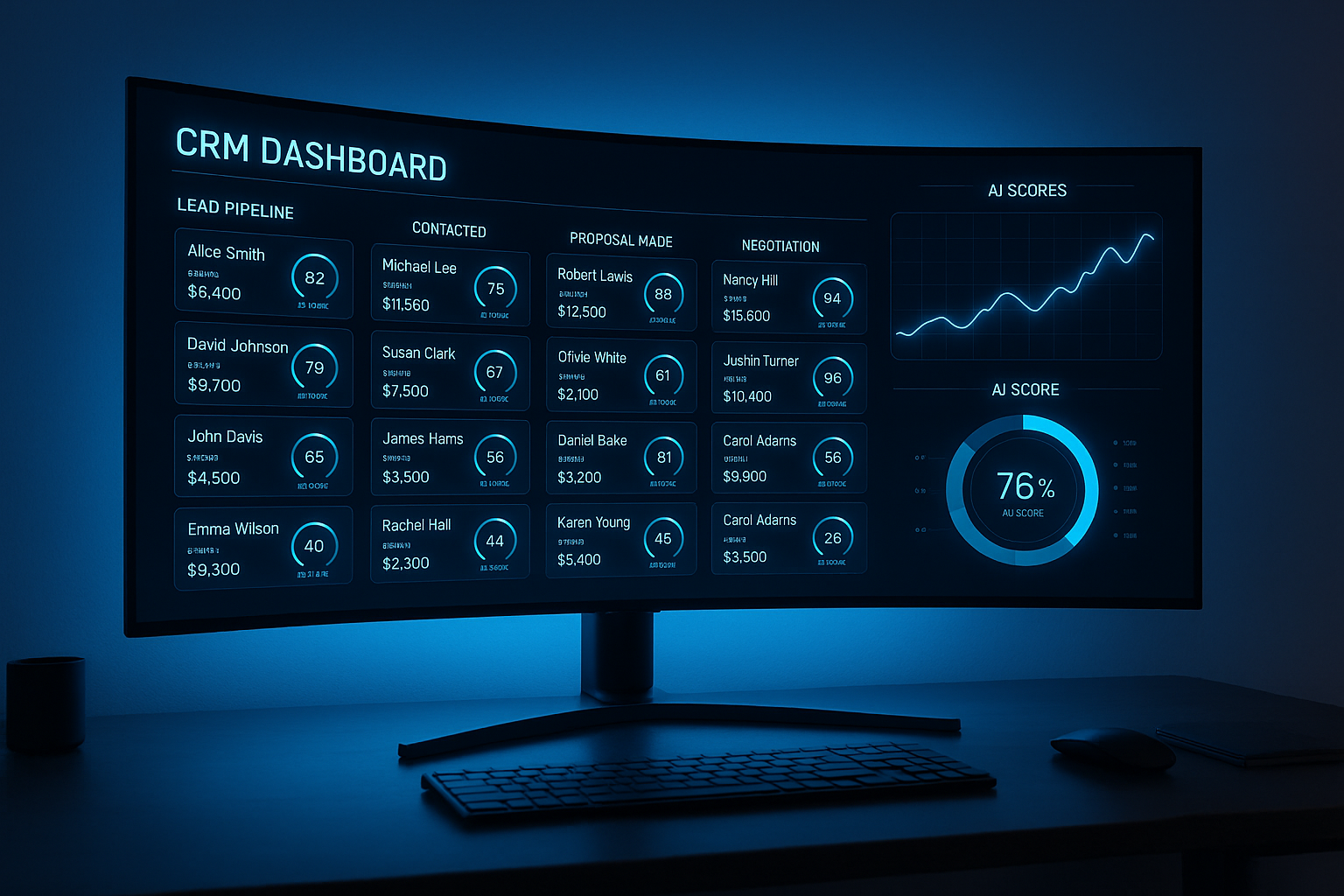
Choosing the right AI real estate CRM can be the difference between a database that quietly collects dust and one that actually books listing appointments. Most agents do not need more leads. They need faster follow-up, better conversations, and a system that remembers to do the stuff humans forget after a long day of showings, open houses, and chasing signatures.
Want seller leads on autopilot? ListingLeads.io combines Google Ads, home value tools, and AI follow-up to book listing appointments while you sleep. Book your free strategy call now →
And yes, the hype is loud. Every platform claims it has smart automation, AI texting, lead scoring, and magic fairy dust. But if you are a real estate agent trying to win more listings in the U.S., you need a practical answer to one question. Which system will help me convert seller leads into real appointments without turning my business into a tech support job?
This guide compares seven popular options for 2026, what they do well, where they fall short, and who they fit best. I am also going to give you the opinion many software roundups avoid. A CRM alone usually does not solve a listing lead problem.
What to look for in an AI real estate CRM
If your focus is listings, not just buyer internet leads, your CRM needs a different skill set. A lot of systems are built to drip on portal leads and call it a day. Sellers are different. Their timeline is emotional, longer, and often triggered by a life event, not a random home search at 11:42 p.m.
Here are the features that matter most.
- ▸ Fast lead response. According to InsideSales research often cited in sales follow-up training, contacting a lead within 5 minutes can make qualification rates dramatically higher than waiting 30 minutes or more.
- ▸ AI text and email follow-up that sounds human enough to keep the conversation moving.
- ▸ Seller-specific automations for home value requests, CMA follow-up, farming nurture, expireds, and FSBOs.
- ▸ Lead source attribution so you know what is producing appointments, not just contact records.
- ▸ Appointment-setting workflows instead of generic “stay in touch” campaigns.
- ▸ Simple interface. If your team needs a two-week boot camp to send a text, that is not efficiency. That is punishment.
Also, if you are still building your seller lead machine, read these six parts of a seller lead generation system that works. The CRM is one part of the machine, not the whole machine.
The 7 best AI CRM platforms for real estate agents in 2026
1. Follow Up Boss
Best for: Teams and high-volume agents who want a proven CRM with broad integrations.
Follow Up Boss has been a favorite for years because it is easy to use and built with real estate workflows in mind. Its AI-related features are improving through integrations, smart action plans, call tracking, and communication tools that help teams stay on top of inbound leads.
Where it shines is speed and visibility. If you have ISA support, admin help, or multiple agents, it keeps everyone honest. Nobody can say, “I thought someone else called that lead.” Classic office line. Rarely true.
- ▸ Strong lead routing and task management
- ▸ Excellent integrations with ad platforms and lead sources
- ▸ Solid for teams that want accountability dashboards
- ▸ Less seller-specific out of the box than some agents expect
2. Lofty
Best for: Agents who want an all-in-one system with websites, CRM, marketing, and AI assistant tools.
Lofty has pushed hard into AI, and it shows. Their assistant tools, automations, ad options, and site features make it attractive for agents who want one login for nearly everything. For some people, that is a dream. For others, it is like trying to use the Swiss Army knife blade as a chef’s knife.
The upside is convenience. The downside is that all-in-one systems can feel expensive if you only use 40 percent of the features.
- ▸ Built-in websites and lead capture
- ▸ AI assistant and nurture tools
- ▸ Good choice for agents who do not want to stitch tools together
- ▸ Can feel bulky for solo agents focused mainly on listings
3. Sierra Interactive
Best for: Established teams that care deeply about search-driven lead generation and CRM follow-up.
Sierra is often chosen by larger producers who want a stronger website and CRM combo. It is known more for internet lead infrastructure than pure AI, but its automations and integrations still make it a serious player in this category.
For listing-side growth, the real question is whether your seller strategy is built into the campaigns. If not, even a strong platform becomes a very expensive digital filing cabinet.
4. kvCORE
Best for: Brokerages and larger teams that need scale, structure, and built-in marketing tools.
kvCORE has a lot of power. It also has a lot of buttons. If you are a broker managing many agents, that may be a fair trade. If you are a solo agent trying to get more listing appointments in one ZIP code, it can feel like driving a bus to the grocery store.
Its AI and automation features are useful, but adoption is the catch. Fancy workflows only work when people actually use them.
- ▸ Large feature set for websites, CRM, and lead nurture
- ▸ Good for brokerages standardizing systems
- ▸ Setup and training can be a project
- ▸ Seller lead customization is often needed
5. LionDesk
Best for: Budget-conscious agents who want basic automation and communication tools.
LionDesk has been popular with solo agents because it is relatively affordable and covers core CRM functions. It is not the most advanced AI real estate CRM on this list, but it can still support texting, drip campaigns, and video messaging in a simple package.
If your budget is tight and you are organized, this can be enough. If you need stronger AI-driven appointment setting, you may outgrow it fast.
6. Wise Agent
Best for: Relationship-based agents who want contact management without complexity overload.
Wise Agent is often appreciated by sphere-first agents who want transaction management, contact organization, and communication features without feeling buried. It is practical. Not flashy. Sometimes that is exactly the right answer.
For AI-heavy workflows, though, it is not usually the first platform agents mention. If your business depends on immediate lead conversion from Google Ads, valuation pages, or cold seller traffic, you may need more specialized follow-up tools layered on top.
7. BoomTown
Best for: Teams with larger budgets that want lead generation plus CRM plus nurture under one roof.
BoomTown has strong brand recognition for a reason. It offers lead gen, CRM, websites, and automation with enough depth for teams to build serious volume. But cost matters here. This is not usually the first stop for a newer solo listing agent watching every dollar.
That said, if you already have traction and need one system to support buyer and seller pipelines, it deserves a look.
Quick comparison for busy agents
If you are skimming between appointments, here is the short version.
- Follow Up Boss. Best mix of usability and team accountability.
- Lofty. Best all-in-one option for agents wanting built-in AI features.
- Sierra Interactive. Strong for search-oriented lead platforms and larger operations.
- kvCORE. Great for brokerages, but can be a lot for solo operators.
- LionDesk. Good entry-level choice if budget is the top concern.
- Wise Agent. Best for relationship-driven simplicity.
- BoomTown. Powerful, but generally better for bigger teams and bigger budgets.
Here is the part most software comparisons miss. The best CRM is not the one with the most features. It is the one that turns your seller leads into conversations before another agent gets there first.
Why most agents still do not get listing appointments, even with a CRM
Pattern interrupt. Your CRM is probably not the bottleneck.
Most agents lose seller leads before the CRM ever has a chance to help. Bad traffic. Weak landing pages. No real hook. Slow first response. Generic “just checking in” texts. Then the agent blames the software. The software, meanwhile, is sitting there like, “I sent the reminder. What more do you want from me?”
If you want listings, your front-end matters as much as your follow-up. That means the right home value offer, the right ad intent, and the right nurture sequence. If you need help there, check out these seller lead capture page templates that convert and property valuation lead magnets that attract sellers.
A better model. CRM plus seller lead engine plus AI follow-up
This is where many agents get stuck. They shop for an AI real estate CRM as if it should also generate the lead, qualify the lead, nurture the lead, and somehow teleport them to the listing presentation.
The stronger approach is simpler.
- ▸ Traffic source. High-intent seller traffic, often from Google Ads.
- ▸ Lead capture tool. Home value page, valuation tool, or CMA offer.
- ▸ AI follow-up. Fast response and ongoing nurture that pushes toward a phone call or appointment.
- ▸ CRM. Tracks, organizes, and supports the process.
That is why smart agents pair CRM decisions with lead source decisions. If you are serious about seller intent traffic, start with Google Ads keywords that get sellers and these real estate landing pages that convert.
Real-world example. What this looks like for a listing agent
Let’s say an agent in Phoenix runs a hyperlocal seller campaign focused on “What’s my home worth in Arcadia?” The traffic goes to a clean valuation page with a strong offer. Not a cluttered website with twelve menu options and a mortgage calculator nobody asked for.
In 30 days, the campaign generates 52 seller leads at an average cost per lead of $41. An AI assistant responds instantly by text and email, asks two qualifying questions, then routes hot leads into the CRM with appointment prompts.
Out of those 52 leads, 19 reply. Eight request a CMA or call. Four listing appointments get booked. One signed listing covers months of marketing spend. Two signed listings make the math very fun.
That is the difference between “having a CRM” and having a seller appointment system.
Common objections agents have, and the honest answer
“These platforms cost too much.”
Fair. Some absolutely do. But the better question is this. Compared to what?
A missed listing appointment can easily cost thousands in gross commission income. If your current process lets internet seller leads sit for two hours while you are at an inspection, the hidden cost is bigger than the software bill.
“I do not have time to learn a new system.”
Also fair. But if you are manually texting every lead, rebuilding reminders in your calendar, and trying to remember whether the expired lead from last Tuesday ever replied, you already have a system. It is just chaotic and unpaid overtime is doing all the work.
The right setup should save time in week two, not create more admin by month three.
“I have tried CRMs before and nobody used them.”
That is usually a setup problem, not a proof that all CRMs fail. If the system is not tied to real lead flow, real scripts, and real accountability, adoption drops fast. People use what helps them close. They ignore what feels like homework.
“My market is different.”
Every agent says this. Sometimes it is true. More often, it is a polite way of saying past marketing did not work.
Different markets need different hooks, offers, and keyword targeting. But motivated sellers still search online, still want answers fast, and still reward the first agent who builds trust.
How ListingLeads.io fits into the picture
ListingLeads.io is not trying to be another bloated CRM you half-use and forget. We help agents build the part that usually breaks first. Seller lead generation and follow-up that turns intent into appointments.
That means Google Ads management, home value lead capture tools, and AI-powered follow-up automation that helps book listing appointments. If you already have a CRM you like, great. We can support the front-end and follow-up engine that feeds it.
If you are comparing lead systems too, these guides will help. See AI real estate lead generation tools that work, AI lead follow-up tools for real estate agents, and the best home valuation lead capture tools compared.
Final verdict. Which AI CRM should you choose?
If you want the safest all-around pick, Follow Up Boss is still hard to beat for usability and team adoption. If you want an all-in-one setup, Lofty is worth a serious look. If you are on a tighter budget, LionDesk or Wise Agent may be enough to get moving.
But here is the bigger truth. The best AI real estate CRM is the one connected to a working seller lead machine. If you want more listings, more home value leads, and more appointments on the calendar, software alone is not the answer. System beats software every time.
If you want help building that system, book a free strategy call with ListingLeads.io. We will show you how to pair the right lead source, the right home value tool, and the right AI follow-up so your CRM finally has something worth managing.
Ready to Fill Your Listing Pipeline?
ListingLeads.io builds the system. Google Ads bring the sellers. AI books the appointments. You show up and win the listing.