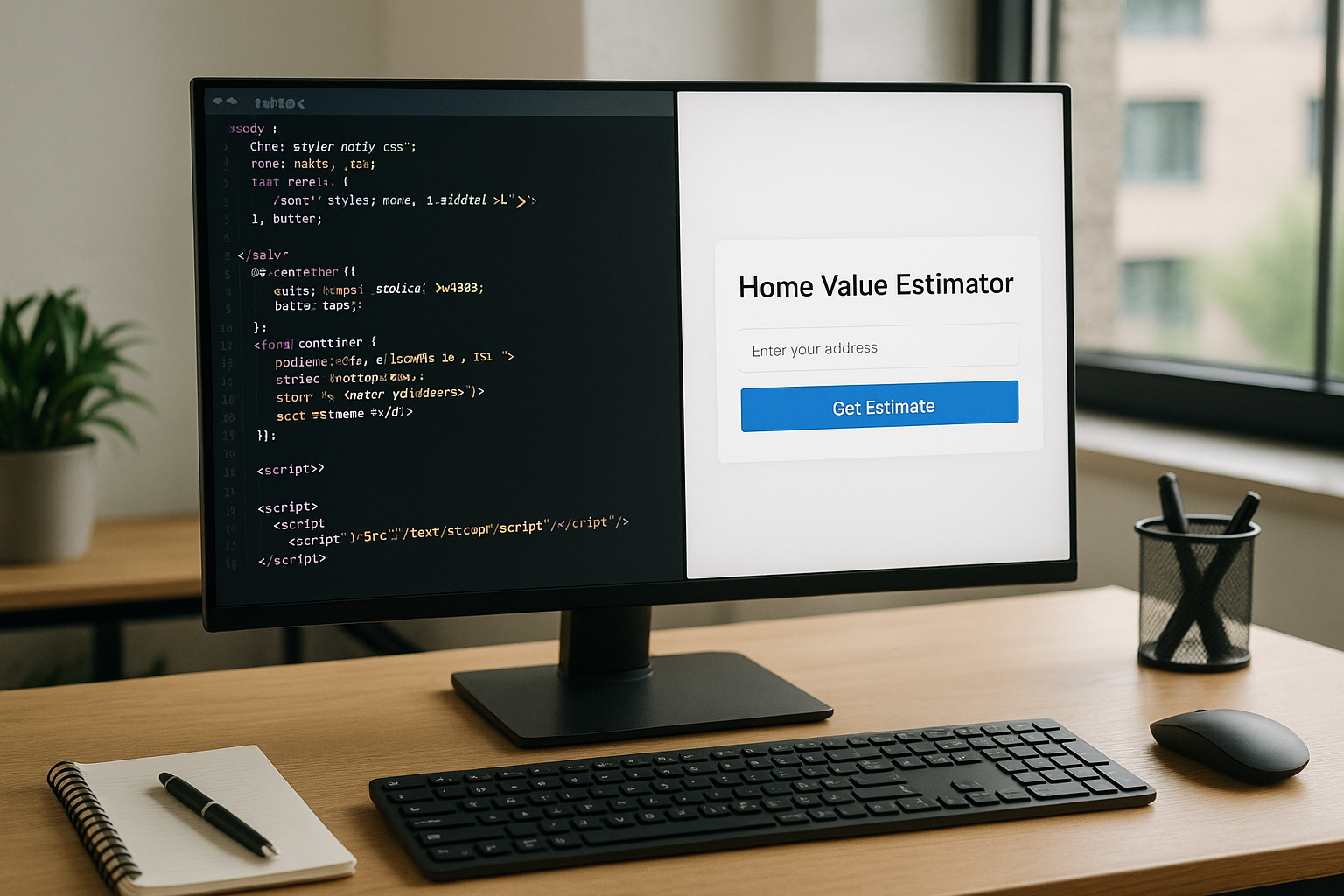
Most agents don’t need more website traffic. They need a better reason for sellers to raise their hand. A home value estimator for agents website visitors can use in under a minute does exactly that, turning casual curiosity into actual listing opportunities.
Want seller leads on autopilot? ListingLeads.io combines Google Ads, home value tools, and AI follow-up to book listing appointments while you sleep. Book your free strategy call now →
Here’s the thing. Homeowners are already asking one question over and over again. What’s my home worth? If your site can answer that question quickly, clearly, and in a way that captures contact info, you stop being just another agent with a headshot and a slogan.
And yes, this matters financially. According to the National Association of Realtors, sellers often contact only one agent before signing. One. If your website grabs them first, you may never have to fight for that listing at the kitchen table.
Why a home value estimator for agents website visitors actually use matters so much
A lot of agents think a home valuation page is just another lead magnet. It’s not. It’s one of the few website tools built around existing seller intent.
People don’t search home values because they’re bored on a Tuesday night. They search because they’re thinking about moving, refinancing, paying off debt, handling probate, downsizing, or simply testing the market. Curiosity is often the front door to a listing appointment.
If you want ideas beyond the estimator itself, this guide on how a What’s My Home Worth page gets you leads is worth reading too. It shows why this kind of page keeps working even when other lead sources get expensive.
Step 1. Pick the right home valuation tool
This is where most agents either overcomplicate things or go cheap and regret it later. Your tool has to do more than spit out a number. It needs to capture leads, load fast, look trustworthy, and trigger follow-up.
At minimum, look for these features:
- ▸ Lead capture before or during report delivery
- ▸ Mobile-friendly design
- ▸ CRM integration
- ▸ Automated email or text follow-up
- ▸ Custom branding
- ▸ A clear path to book a CMA or listing consult
If you’re comparing options, start with these breakdowns of the best home valuation lead capture tools compared and real estate AVM tools that generate listing leads. Not every tool is built for conversion. Some are just digital decorations.
Step 2. Create a dedicated seller landing page, not just a buried menu link
A hidden “Home Value” tab in your navigation is better than nothing. Barely. But if you really want results, build a dedicated page focused on one action only.
That page should answer three questions fast:
- ▸ What is this?
- ▸ Why should I trust it?
- ▸ What happens after I submit my address?
This is why high-converting agents use focused layouts, simple copy, and almost zero distractions. If you want inspiration, check out these home value landing pages Realtors use to get leads and these seller lead capture page templates that convert.
What to put above the fold
Keep it simple. A headline, a short trust-building sentence, the form, and maybe one photo of your market. Not six stock photos of smiling couples holding coffee mugs. We’ve all seen those.
Example headline: Find Out What Your Home Could Sell for in Today’s Market
Step 3. Keep the form short enough to finish
Every extra field costs you leads. That’s not opinion. It’s been shown again and again in landing page testing across industries. More friction equals fewer submissions.
For a home value estimator for agents website pages, less is usually more. Start with address, name, email, and phone if your process supports it. If your market is sensitive to phone numbers, collect email first and ask for phone later in follow-up.
The best lead form is not the one that gives you the most data. It’s the one that gets completed most often.
Pattern interrupt. A seller who gives you only an address and email is still far more valuable than a seller who never submits your 11-field form. Fancy intake pages do not impress busy homeowners.
Step 4. Add trust signals that make skeptical homeowners feel safe
Let’s be honest. A lot of homeowners assume submitting a form means they’ll get swarmed by calls in the next eight minutes. Their fear is not irrational.
Your page should reduce that tension right away. Add:
- ▸ A clear privacy statement
- ▸ Your name, brokerage, and local market area
- ▸ Reviews or testimonials from sellers
- ▸ A note that online estimates are a starting point, not a final CMA
- ▸ A local headshot or brand photo that looks current
If your page looks generic, your leads will feel generic. This guide on features every real estate home valuation website needs covers the trust elements many agents skip.
Use local language
A homeowner in Scottsdale doesn’t want a page that sounds like it was copied from a Tampa agent. Mention neighborhoods, school districts, seasonal demand, or even lot size trends if they matter in your area. Local details increase trust fast.
Step 5. Connect the estimator to your follow-up system immediately
This is where most agents lose the lead. They add the tool, get excited, then realize leads are sitting in an inbox while they’re at an inspection, open house, or trying to calm a nervous buyer before underwriting asks for another PDF from 2017.
You need an automatic response within minutes. Faster is better. According to widely cited lead response studies, contacting a lead within 5 minutes can massively improve contact and conversion rates compared with waiting 30 minutes or more.
Your follow-up should include:
- Instant email confirming the request
- Text message introducing you by name
- A second message offering a more accurate custom valuation
- A booking link for a seller consult or pricing review
This is one reason ListingLeads.io focuses so heavily on AI-powered follow-up automation. Speed matters. Consistency matters more.
If you’re building a larger listing pipeline, read the six parts of a seller lead generation system that works. The estimator is powerful, but it works best as part of a real system.
Step 6. Send traffic from Google Ads, not just your homepage
If you want your estimator to produce leads consistently, traffic has to be intentional. Hoping people stumble onto your site from Instagram bio links and the occasional postcard QR code is not a plan.
Google Ads work especially well here because they capture active seller intent. Someone searching “what is my house worth in Plano TX” is a very different prospect than someone passively scrolling social media between dog videos.
For strategy ideas, see Google Ads keywords that get sellers and ways to boost real estate Google Ads conversion rates. Sending paid traffic to your homepage is like sending listing presentation prospects to your office voicemail. Technically possible. Deeply unwise.
A simple campaign example
Let’s say a team in suburban Atlanta spends $1,500 per month on seller-focused Google Ads. Their dedicated valuation page converts at 9 percent. If cost per click averages $3.50, that budget could drive around 428 clicks and roughly 38 leads.
If just 10 percent of those leads become appointments, that’s about 4 listing conversations per month. Close one average listing, and the campaign often pays for itself several times over. Close two, and nobody’s complaining about ad spend anymore.
Step 7. Measure appointments, not vanity metrics
Pageviews are nice. Click-through rates are helpful. But the metric that matters most is simple. Did this turn into listing appointments?
Track these numbers every month:
- ▸ Traffic to the valuation page
- ▸ Form conversion rate
- ▸ Lead-to-contact rate
- ▸ Contact-to-appointment rate
- ▸ Appointment-to-listing rate
- ▸ Cost per appointment and cost per signed listing
If you need help understanding what good numbers look like, this article on metrics that reveal your real estate Google Ads ROI is a smart next read.
Common objections agents have, and the honest answer
“I don’t have time to build all this.”
Fair. Most productive agents are already buried in showings, paperwork, follow-up, and trying to keep deals together. That’s exactly why this should be installed correctly the first time. Once it’s live, it keeps working while you do actual agent things.
“I’ve tried home value leads before and they were junk.”
Sometimes they are. Usually because the traffic was weak, the page was generic, or the follow-up was slow. Bad implementation creates bad leads. A well-built home value estimator for agents website strategy is very different from buying random shared leads and hoping one answers the phone.
“My market is different.”
Every market says this. Luxury markets say it. Rural markets say it. Snowbird markets definitely say it. The truth is seller curiosity exists everywhere. The messaging may change, but the core offer still works.
Real-world scenario. How this plays out in daily agent life
Picture an agent farming two neighborhoods of 1980s move-up homes. She runs seller-focused Google Ads to a valuation page, mentions the page at open houses, and links it in a monthly sphere email. Over 30 days, she gets 41 seller leads.
Her automated follow-up texts every lead immediately, then offers a custom pricing review. Twelve reply. Five book calls. Three become listing appointments. One signs within two weeks, one lists the following month, and one decides to wait until school ends.
That is not fantasy. That is what happens when traffic, page design, and follow-up are connected instead of living in separate universes.
Extra ways to get more mileage from your home value page
Once your estimator is live, use it everywhere. Seriously. It should not sit quietly on your site like a forgotten brochure rack.
- ▸ Add it to your email signature
- ▸ Mention it during open house conversations with neighbors
- ▸ Use it in expired listing follow-up
- ▸ Include it on postcards and farming mailers with a QR code
- ▸ Share it in your sphere newsletter
- ▸ Use it in FSBO and pre-listing scripts when appropriate
If you want more listing-side ideas around farming and seller outreach, these guides on digital real estate farming lead strategies and ways to get more listings as a real estate agent pair nicely with this setup.
What ListingLeads.io does differently
A lot of companies sell one piece of the puzzle. Maybe a tool. Maybe ad management. Maybe a CRM add-on. But seller lead generation works best when the pieces actually talk to each other.
ListingLeads.io combines Google Ads management, home value lead capture tools, and AI follow-up automation so your leads don’t stall out after the form fill. The goal is not more “leads” sitting in a spreadsheet. The goal is more conversations with homeowners who may list.
That’s the difference between marketing activity and actual pipeline.
Final thoughts
A strong home value estimator for agents website pages is not just a nice feature. It’s one of the most practical ways to turn seller curiosity into listing appointments, especially when paired with targeted traffic and fast follow-up.
If you want this installed the right way, with Google Ads driving seller traffic and AI helping book appointments behind the scenes, book a free strategy call with ListingLeads.io. We’ll show you how to build a seller lead system that brings in opportunities even when you’re out on appointments, at an open house, or finally taking that one afternoon off.
Ready to Fill Your Listing Pipeline?
ListingLeads.io builds the system. Google Ads bring the sellers. AI books the appointments. You show up and win the listing.