Most real estate agents waste hundreds of dollars on Google Ads because they cast too wide a net. They target entire metros, bid on generic keywords, and wonder why their cost per lead looks like a car payment. Hyperlocal Google Ads real estate campaigns flip that script entirely. Instead of shouting into the void, you whisper directly into the ear of the homeowner who’s already thinking about selling in the exact neighborhood you want to farm. And that whisper? It converts at two to three times the rate of broad campaigns.
I’ve spent the better part of two decades watching agents burn through ad budgets like kindling. The ones who win consistently aren’t spending more money. They’re spending smarter money. They’re going small to win big. And I’m going to show you exactly how they do it with five tactics you can steal starting this week.
Want seller leads on autopilot? ListingLeads.io combines Google Ads, home value tools, and AI follow-up to book listing appointments while you sleep. Book your free strategy call now →
Why Hyperlocal Google Ads for Real Estate Outperform Broad Campaigns Every Time
Here’s a number that should stop you mid-scroll. According to Google’s own data, 76% of people who search for something nearby visit a business within a day. In real estate terms, that means people searching “sell my house in [neighborhood]” are not tire-kickers. They’re motivated. They’re ready. And they’re looking for someone who knows their specific area.
Broad campaigns targeting “sell my house in Dallas” put you in a bidding war with every agent, iBuyer, and national brokerage in the metro. Your cost per click skyrockets. Your ad gets buried. Your leads are scattered across a 50-mile radius.
Hyperlocal campaigns targeting “home value in Lakewood Dallas” or “sell my house in Bishop Arts District” do something completely different. They match you with homeowners in the exact streets you want to own. Your ad feels personal. Your landing page feels familiar. And your cost per lead drops, sometimes dramatically.
There’s a reason Google Ads consistently outperform Facebook Ads for real estate when it comes to seller intent. Google captures demand. People are actively searching. They’re raising their hand. All you have to do is be the right answer in the right zip code at the right moment.
Tactic 1: Geo-Fence Specific Neighborhoods, Not Entire Cities
This is the foundation. Everything else we’re going to talk about builds on this one decision.
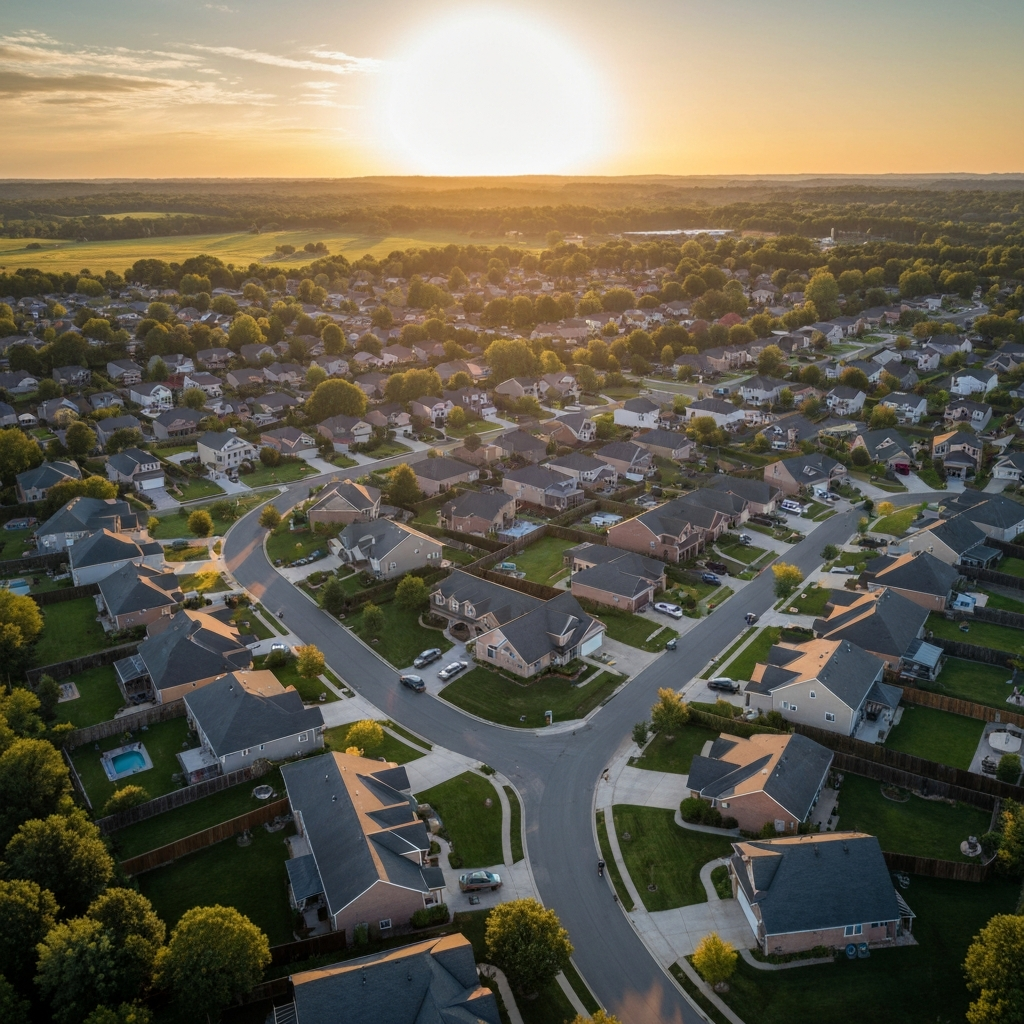
Google Ads lets you target by radius, zip code, city, or even draw custom boundaries on a map. Most agents just type in their city name and call it a day. That’s a mistake. Instead, create separate campaigns for each neighborhood or subdivision you want to dominate.
Let’s say you’re an agent in Scottsdale, Arizona. Don’t run one campaign for “Scottsdale.” Build individual campaigns for Arcadia, Gainey Ranch, McCormick Ranch, and DC Ranch. Each campaign gets its own budget, its own keywords, and its own ad copy that speaks directly to that community.
Why does this matter so much? Because a homeowner in Gainey Ranch who sees an ad that says “Find out what your Gainey Ranch home is worth” is far more likely to click than one that says “Get your Scottsdale home value.” Specificity builds trust instantly. It tells the homeowner, “This agent knows my neighborhood.”
How to Set Your Geo-Targeting Radius
For most residential neighborhoods, a 1 to 3 mile radius works perfectly. In denser urban areas, you can go even tighter. In rural markets, you might need 5 to 10 miles. The key is testing. Start tight, then expand only if you need more volume.
One important setting most agents miss: make sure your location targeting is set to “People IN or regularly IN your targeted locations” and not “People interested in your targeted locations.” That second option will show your ads to people across the country who are browsing real estate in your area. That’s fine for buyer leads, but terrible for seller leads. You want the person sitting in the house, not the one dreaming about it from three states away.
Tactic 2: Build Neighborhood-Specific Keywords That Sellers Actually Search
Generic keywords like “sell my house fast” are expensive. They’re competitive. And honestly, they attract a lot of tire-kickers and people looking for those “we buy ugly houses” companies.
Neighborhood-specific keywords cost less and convert better. Here’s the formula that works:
Take a seller-intent keyword and add your target neighborhood, subdivision, or zip code. Like this:
- ▸ “home value in [Neighborhood Name]”
- ▸ “best realtor in [Subdivision]”
- ▸ “sell my house [Zip Code]”
- ▸ “real estate agent [Neighborhood Name]”
- ▸ “what is my home worth in [Community Name]”
These long-tail keywords often have lower search volume. That scares agents away. Don’t let it scare you. Lower volume means lower competition, lower cost per click, and higher intent. We’ve seen campaigns where hyperlocal keywords convert at 15% to 22%, compared to 4% to 6% for broad metro keywords. That’s not a small difference. That’s the difference between a profitable campaign and a money pit.
If you want a massive head start on keyword research, check out our list of 127 real estate Google Ads keywords that get sellers. It’s a goldmine you can customize for your specific neighborhoods.
Tactic 3: Create Hyper-Relevant Landing Pages with Home Value Tools
Here’s where most agents completely drop the ball. They spend good money on well-targeted ads, then send traffic to their generic brokerage homepage. Or worse, a Zillow-style page that looks like every other agent in town.
Your ad promised something specific. Your landing page needs to deliver on that promise.
If your ad targets homeowners in Westlake, your landing page should say “Westlake” in the headline. It should reference local market stats. It should feature a home value estimator tool that lets the homeowner type in their address and instantly get a valuation range.
Why does the home value tool work so well? Because it gives the homeowner something they actually want. They’re curious. They want a number. And to get that number, they give you their address, name, email, and phone number. That’s a seller lead. A real one.
This is exactly the kind of lead capture tool that ListingLeads.io builds into every campaign. The home value page looks custom, feels local, and captures leads 24/7 without you lifting a finger.
What Makes a Landing Page Convert at 15% or Higher
After testing hundreds of landing pages across dozens of markets, here’s what the top performers have in common:
- ▸ Neighborhood name in the headline. “What’s Your Home Worth in River Oaks?” beats “What’s Your Home Worth?” every time.
- ▸ One clear call to action. Don’t give them five things to click. Give them one: enter your address.
- ▸ Your face and name visible. People hire people, not brands. A professional photo builds immediate trust.
- ▸ Social proof. Testimonials, recent sales in the area, number of homes sold. Anything that says “this person knows what they’re doing.”
- ▸ Mobile-first design. Over 60% of these searches happen on phones. If your page doesn’t load fast and look great on mobile, you’re losing the majority of your clicks.
For a deeper look at how to improve your page performance, read our guide on 12 ways to boost real estate Google Ads conversion rates.
Tactic 4: Use Ad Copy That Speaks Like a Local (Because You Are One)
This is the tactic that separates agents who “do Google Ads” from agents who dominate with Google Ads.
Your ad copy needs to sound like it was written by someone who drives those streets every day. Because you do. Use that to your advantage.
Here’s a real example. Compare these two ads:
Generic Ad: “Thinking of Selling? Get a Free Home Valuation Today. Top-Rated Agents in Your Area.”
Hyperlocal Ad: “Homes in Eastwood Are Up 12% This Year. What’s Yours Worth? Free Instant Report From a Local Eastwood Specialist.”
The second ad does three things the first one doesn’t. It names the neighborhood. It includes a specific, timely stat. And it positions you as a specialist, not just another agent.
Click-through rates on hyperlocal ad copy are typically 30% to 50% higher than generic alternatives in the same market. That means more traffic for the same budget. More leads. More appointments.
Quick Tips for Writing Hyperlocal Ad Headlines
- ▸ Always include the neighborhood or subdivision name in at least one headline
- ▸ Reference recent market data (“up 8% since January” or “median home price just hit $450K”)
- ▸ Use urgency that’s honest, not salesy (“Inventory is low. Sellers have the advantage right now.”)
- ▸ Test multiple variations. Google’s responsive search ads let you load up to 15 headlines. Use them all.
If you’re newer to running campaigns and want a step-by-step foundation, our guide on how to run Google Ads for real estate like a pro walks you through everything from account setup to optimization.
Tactic 5: Pair Google Ads with AI Follow-Up That Actually Books Appointments
This is the one that changes everything. And honestly, it’s the tactic I’m most passionate about. Because I’ve watched too many agents generate great leads, then let them die in their CRM because they got busy with showings, closings, and life.
Here’s a stat that should make your stomach drop: the average real estate agent takes 47 hours to respond to an online lead. Nearly two full days. By then, that seller has already talked to three other agents. They’ve probably already scheduled a listing presentation with someone else.
Speed to lead isn’t just important. It’s everything.
That’s why the best hyperlocal Google Ads campaigns include AI-powered follow-up automation that contacts leads within seconds. Not minutes. Seconds. The AI sends personalized texts and emails, answers questions, qualifies the lead, and books an appointment on your calendar. All while you’re at a listing presentation or eating dinner with your family.
A Real-World Scenario That Shows How This Works
Let me paint the picture. It’s Tuesday at 9:14 PM. A homeowner in your target neighborhood just Googled “what is my home worth in Maple Ridge.” She sees your ad, clicks it, lands on your custom home value page, and enters her address. She gets her estimated value. You get her name, email, phone number, and property address.
Within 30 seconds, she receives a text: “Hi Sarah, thanks for checking your home value for 412 Oak Street! I’m [Your Name], a Maple Ridge specialist. Are you thinking about selling soon, or just curious about your equity?”
Sarah texts back, “We’re thinking about listing in the next couple months.” The AI responds conversationally, asks a few qualifying questions, and offers to schedule a free market analysis. Sarah picks a time slot. By Wednesday morning, you wake up to a confirmed listing appointment.
You didn’t make a single phone call.
This isn’t hypothetical. This is exactly how the ListingLeads.io system works. We’ve seen agents go from 2 to 3 listing appointments per month to 8 to 12 just by adding AI follow-up to their existing ad spend.
Addressing the Elephant in the Room: “But My Market Is Different”
I hear this all the time. “This might work in big cities, but I’m in a smaller market.” Or, “My area is super competitive. Every agent is already on Google.”
Here’s the truth. Hyperlocal works better in competitive markets, not worse. The more agents bidding on broad terms, the more advantage you gain by going narrow. You’re not competing against them. You’re going around them.
And in smaller markets? The opportunity is even bigger. There might only be a handful of agents running Google Ads at all. Some neighborhoods have zero competition. You could be the only ad a homeowner sees. That’s the equivalent of being the only real estate sign on an entire street.
The other common objection: cost. “I tried Google Ads and it was too expensive.”
Nine times out of ten, the problem wasn’t the cost. It was the setup. Broad targeting, generic keywords, no dedicated landing page, and no follow-up system. Fix those four things and the economics change completely. We regularly see hyperlocal campaigns generating seller leads at $15 to $35 per lead. When one listing nets you a $10,000 to $15,000 commission, the math is pretty hard to argue with.
Knowing which numbers to track is half the battle. Here’s a great breakdown of the 6 metrics that reveal your real estate Google Ads ROI so you can make data-driven decisions instead of guessing.
Bonus: Stack Google Local Service Ads on Top of Your Hyperlocal Campaigns
Here’s a quick bonus tactic that most agents overlook. Google Local Service Ads (LSAs) show up above traditional search ads. They display your photo, reviews, and a “Google Guaranteed” badge. They’re pay-per-lead, not pay-per-click.
Running LSAs alongside your hyperlocal search campaigns means you can take up two spots on the first page of Google for the same neighborhood searches. That’s serious real estate on the search results page. Pun absolutely intended.
If you want to explore this further, read our guide on 8 Google Local Service Ads tips for realtors. It pairs perfectly with everything we’ve covered in this post.
Putting It All Together: Your Hyperlocal Ads Action Plan
Let’s recap. Here’s your playbook, in order:
- Pick 3 to 5 neighborhoods where you want to be known as THE listing agent. Build separate campaigns for each.
- Geo-fence tightly using radius targeting or zip codes. Set location targeting to “presence” only.
- Use neighborhood-specific keywords that match real seller searches. Long-tail is your friend.
- Write ad copy that names the neighborhood, includes local data, and positions you as a specialist.
- Send clicks to a dedicated landing page with a home value tool, your photo, testimonials, and one clear CTA.
- Deploy AI follow-up that contacts leads in under a minute, qualifies them, and books appointments on your calendar automatically.
Do these six things and you’ll be running a tighter, more profitable campaign than 95% of agents in your market. Not an exaggeration.
Stop Casting a Wide Net. Start Owning Your Neighborhoods.
Hyperlocal Google Ads for real estate aren’t just a tactic. They’re a philosophy. Go small. Go specific. Go where other agents aren’t willing to go because they’re chasing volume over quality. The agents who dominate their farm areas in 2025 and beyond won’t be the ones spending the most money. They’ll be the ones spending the smartest money.
You already know your neighborhoods better than any algorithm. You’ve walked the streets, previewed the homes, and had coffee at the corner shop. Now it’s time to make sure every homeowner in those neighborhoods knows your name, too.
At ListingLeads.io, we build the entire system for you. The hyperlocal Google Ads real estate campaigns, the home value landing pages, the AI follow-up that books listing appointments while you’re out winning business. We’ve done it for agents in markets big and small across the country, and we’d love to show you what it looks like for your specific neighborhoods.
Book your free strategy call and let’s map out a hyperlocal game plan that fills your listing pipeline. No pressure, no pitch. Just a real conversation about what’s possible for your business.
Ready to Fill Your Listing Pipeline?
ListingLeads.io builds the system. Google Ads bring the sellers. AI books the appointments. You show up and win the listing.