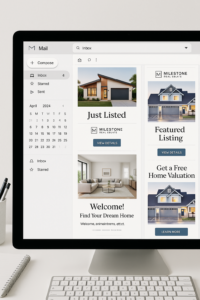
Most agents do not need more traffic. They need better conversion after the click. That is exactly why automated home value reports for agents have become one of the smartest ways to turn curious homeowners into real listing opportunities. If you are tired of paying for seller leads that ghost you, or chasing old internet leads that forgot your name five minutes later, a strong home value system can change the math fast.
Want seller leads on autopilot? ListingLeads.io combines Google Ads, home value tools, and AI follow-up to book listing appointments while you sleep. Book your free strategy call now →
Why automated home value reports for agents work so well
A homeowner might ignore a generic ad that says, “Thinking about selling?” But ask, “Want to know what your home is worth?” and suddenly they are paying attention. It is direct, familiar, and tied to money. People love that topic almost as much as they love checking their Zestimate and arguing with it.
The best part is intent. Seller lead forms based on home value estimates attract homeowners already thinking about equity, timing, upgrades, or a possible move. That is a very different lead than someone casually scrolling social media while waiting in the school pickup line.
According to the National Association of Realtors, sellers typically contact only one agent before listing. One. That means if your system captures attention early and follows up fast, you can win listings before your competitors even know the homeowner is thinking about selling.
That is also why pairing valuation tools with strong follow-up matters so much. A report alone is not a listing machine. A report plus speed, good messaging, and consistent follow-up. That is where the real money is.
What agents should look for in a home value tool
Before we get into the tools, let’s talk standards. Because not every home valuation widget deserves a place on your website, landing page, or Google Ads funnel.
- ▸ Lead capture before or during value delivery. If it gives away everything upfront, you lose the conversation.
- ▸ Mobile-friendly design. More than half of real estate traffic comes from phones. If the form is clunky, your cost per lead climbs.
- ▸ CRM integration or easy export. Manual lead sorting is where motivation goes to die.
- ▸ Custom branding. You want your name remembered, not just the software company’s.
- ▸ Follow-up options. Email, text, alerts, AI responses, and appointment booking all help.
If you want a deeper breakdown of what high-converting valuation sites need, read 8 Features Every Real Estate Home Valuation Website Needs. It is the kind of checklist that can save you from buying the wrong tool and then pretending you “just need to test it longer.”
4 automated home value report tools agents love
1. Cloud CMA
Cloud CMA is a favorite because it helps agents produce clean, polished reports fast. While many know it for listing presentations and comparative market analysis, it can also support your home value lead process when paired with a strong capture page and follow-up sequence.
It shines when a homeowner wants more than an instant estimate. Maybe they requested a value from your website, responded to a farming postcard, or talked to you at an open house. Cloud CMA helps you deliver something that feels personal, not mass-produced.
Best for: agents who want a polished CMA follow-up after the lead comes in.
Watch out for: it is not always the best stand-alone instant lead capture tool by itself.
If you are comparing valuation software against presentation tools, check out 6 Best CMA Tools for Real Estate Agents in 2026. It helps clarify what belongs in the lead generation stage versus the listing appointment stage.
2. Homebot
Homebot has built a loyal following because it keeps homeowners engaged over time. Instead of a one-and-done estimate, it sends ongoing home finance and equity insights that keep your name in front of the homeowner month after month.
That makes it useful for sphere of influence marketing, past clients, and long-term nurture. The homeowner may not be ready today, but if they keep seeing their estimated value, equity position, and mortgage insights with your branding attached, you stay top of mind.
Best for: sphere, past clients, and agents who want recurring homeowner engagement.
Watch out for: some agents expect instant listing appointments and get frustrated. Homebot is stronger for nurture than immediate demand capture.
That said, nurture matters. A lot. Especially if your market has longer decision cycles or homeowners who need a few months to prep repairs, interview agents, or figure out where they are moving next.
3. CINC Seller Suite
CINC Seller Suite is designed with lead generation in mind. This is the category many team leaders and growth-focused agents care about most. You want leads captured, routed, tracked, and worked quickly. CINC tries to keep those pieces under one roof.
For teams running paid traffic, especially Google Ads, that can be attractive. The valuation page drives the opt-in, the CRM logs behavior, and agents can follow up based on lead activity. That helps if you are trying to manage ISA support, inside sales workflows, or team distribution.
Best for: teams and brokers who want more built-in lead management.
Watch out for: it can feel heavy if you are a solo agent who just wants a simpler seller lead setup.
4. Listings-to-Leads home value pages
Listings-to-Leads gets a lot of love from agents because it is simple, practical, and built for marketing execution. Many agents use it for listing promotions, but its home value pages also appeal to those who want a launch-ready option without needing a degree in software settings.
If you have ever thought, “I know I should run seller ads, but I do not want to spend three weeks building the page,” this type of tool makes sense. It can be especially useful for solo agents, local farming campaigns, or quick market tests.
Best for: agents who want easier setup and a practical launch path.
Watch out for: easier does not always mean higher conversion. The page and follow-up still matter.
A strong opinion. The tool is not the strategy
Here is the part a lot of agents miss. The software usually is not the reason the campaign fails. The reason is weak traffic, weak offer framing, weak speed to lead, or no follow-up after day three.
A mediocre home value tool with excellent traffic and aggressive follow-up will often beat a beautiful tool sitting quietly on a website nobody visits.
That is why top agents do not just ask, “Which valuation widget should I buy?” They ask, “How do I get seller intent traffic and turn it into appointments?” Much better question. Much more profitable question.
If you need ideas beyond your website, you will like 10 Real Estate Listing Lead Generation Tactics for 2026 and 13 Ways to Get More Listings as a Real Estate Agent. Both are full of practical moves that pair nicely with seller valuation funnels.
What actually converts seller leads into listing appointments
The best automated home value reports for agents do one thing very well. They start the conversation. But the conversion happens after the form fill.
1. Fast response time
Harvard Business Review research found that companies responding within an hour were nearly 7 times more likely to qualify a lead than those waiting longer. Real estate is no different. If a homeowner asks for their value and hears from you quickly, you feel responsive and professional. Wait until tomorrow, and they may already be talking to another agent.
2. A better message than “Just checking in”
Nobody gets excited about “just checking in.” Homeowners want clarity. They want to know if now is a good time to sell, what updates matter, and how accurate the estimate really is. Your follow-up should speak to that.
- ▸ “Would you like a more accurate value based on recent neighborhood sales?”
- ▸ “Curious what your home could sell for if you made no updates at all?”
- ▸ “I can show you the 3 comps pulling your value up or down.”
That kind of message opens doors. It feels specific. Helpful. Human.
3. Consistent multi-touch follow-up
Most seller leads do not convert on the first touch. Or the second. Or even the fifth. A study often cited across sales industries found that 80 percent of sales require 5 follow-up contacts or more, yet many reps stop after 1 or 2. That gap is where listings get lost.
This is one reason we are big believers in AI-assisted follow-up at ListingLeads.io. It helps agents stay consistent without becoming glued to their phones every waking hour. Because yes, you still have showings, clients, inspections, and a life.
Case study example. How this looks in the real world
Let’s take a realistic example. A team in a midsize U.S. market runs Google Ads to a home value landing page. Over 30 days, they spend $2,000 and generate 52 seller leads. That puts cost per lead at about $38.46.
Now the important part. Fast AI text response goes out in under 60 seconds. Email follow-up delivers the report and offers a custom pricing review. A human agent calls hot leads within 5 minutes during business hours. Result? 11 conversations, 5 listing appointments, and 2 signed listings.
Even if one of those listings sells for a modest commission, the campaign can pay for itself many times over. That is why serious agents care less about lead count alone and more about the full appointment pipeline.
Common objections agents have, and the honest answers
“These tools are too expensive.”
Fair concern. But the cost question should not be, “What does the software cost?” It should be, “What does one listing appointment cost me, and what is that worth?” A tool that helps create even one extra listing every few months can be a bargain.
The bigger waste is paying for ads, mailers, farming, or open house traffic with nowhere meaningful to send people. That is like buying gas for a car with no tires. Technically ambitious. Practically unhelpful.
“I tried home value leads before and they were junk.”
Also fair. A lot of agents have tried weak Facebook traffic, broad zip code targeting, or bad follow-up and concluded the lead type was the problem. Often it was not. Usually the issue was the source, the page, the offer, or the lack of a real system.
If your market is competitive, this matters even more. You need intent-based traffic and strong conversion mechanics. That is one reason many agents are shifting toward Google search traffic. If someone actively searches “what is my home worth in Phoenix” or “sell my home in Tampa,” they are a lot warmer than someone interrupted by an ad between dog videos.
For more on that, see 7 Reasons Google Ads Beat Facebook Ads in Real Estate and 11 Ways Google Ads Generate Seller Leads in Real Estate.
How to use home value reports in your existing listing business
This is where agents get creative. Automated valuation tools are not just for website visitors. They fit naturally into several listing-focused channels.
Open houses
A neighbor walks in and says they are “just looking.” Classic. Offer a QR code that lets them request their own home value report. Now the open house becomes a seller lead event, not just a buyer tire-kicking festival.
Expired listings
Expireds already care about pricing. A refreshed home value conversation can reopen the relationship without sounding like every other agent reading the same script. If you work that niche, pair this with ideas from 9 Scripts to Convert Expired Listing Leads in 2026.
Geographic farming
Your postcard, neighborhood email, or local Facebook group post does not need a hard sell. A simple “Get your updated home value” offer is enough to start. If farming is a serious part of your listing plan, read 7 Digital Real Estate Farming Lead Strategies That Work.
Google Ads
This is our favorite for a reason. Search intent is hard to beat. If you want seller leads now, a high-converting home value page connected to the right keywords can produce serious momentum. You can explore supporting reads like 127 Real Estate Google Ads Keywords That Get Sellers and 12 Ways to Boost Real Estate Google Ads Conversion Rates.
The smartest setup for most agents
If you want the honest answer, the smartest setup for most agents is not just “pick one tool.” It is this:
- A focused home value landing page that captures seller intent.
- Google Ads traffic targeting local homeowners searching for value-related terms.
- Automated follow-up by text and email in the first minute.
- Human contact for qualified leads fast.
- A strong CMA or pricing conversation that moves the lead toward an appointment.
That is the difference between collecting leads and building a listing pipeline. If you want more examples of page structures that work, check out 3 Home Value Landing Pages Realtors Use to Get Leads and 5 Seller Lead Capture Page Templates That Convert.
Final thoughts
The best automated home value reports for agents are not just about giving homeowners an estimate. They are about starting more seller conversations, following up faster, and turning intent into listing appointments. If you want a system that combines the right home value tool, Google Ads traffic, and AI-powered follow-up that keeps working after business hours, book a free strategy call with ListingLeads.io. We will show you how to build a seller lead machine that actually books appointments.
Ready to Fill Your Listing Pipeline?
ListingLeads.io builds the system. Google Ads bring the sellers. AI books the appointments. You show up and win the listing.